Tiny Apartment, Zero Excuses?
Make a small workout corner feel possible without buying a room’s worth of gear.
Jump to the workouts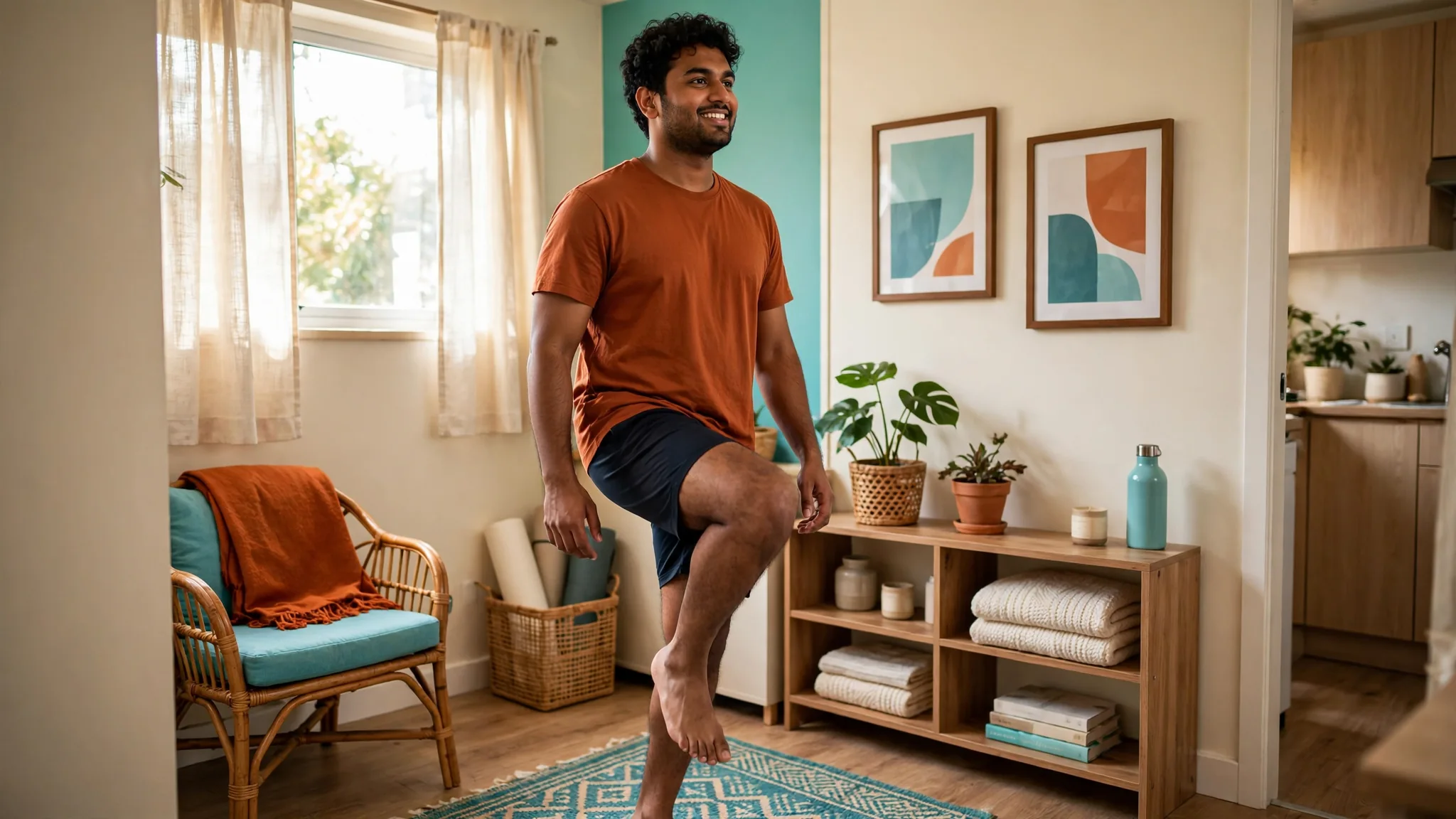
Living in a small apartment does not mean giving up movement. With a clear yoga-mat sized zone, a sturdy chair nearby, and low-noise moves, you can build strength and shake off stiffness without bothering neighbors or rearranging furniture.
This guide shows how to set up a safe corner, improve airflow and light, and choose standing-first routines that keep impact and sound down. Think practical, renter-friendly training that fits between work calls, dinner prep, and downstairs naps.
Start here.
- You only need about 2 by 6 feet of clear, non-slip floor to train quietly and safely.
- Standing, wall-supported moves reduce noise, protect floors, and skip jumping entirely.
- Good lighting, airflow, and quick-pack storage make small-space workouts stick on busy days.
Map Your 2-by-6 Corner
Look for a quiet rectangle about two paces long and one pace wide near a wall or solid doorframe. Clear cords, rugs that slide, and low stools. Test your arm span slowly in all directions, then check you can hinge and squat without hitting shelves or swinging doors.
Keep a sturdy chair or counter within reach for balance during squats and quad stretches. Lock wheels, test wobble before you start, and keep water and phone off the floor. If you share walls, train in socks or soft shoes and add a thin mat to muffle sound.
- Leave 6 inches from the wall for heel and hand clearance
- Face away from TV stands, plants, and floor lamps
- Reset furniture right after so the room stays livable
Keep It Quiet and Floor-Friendly
Low-impact standing work is ideal when floor access is limited or downstairs neighbors are home. Try Upright Leg Foundations, a 12-minute beginner session using a wall or chair that features bodyweight squats, hip hinges, and calf raise intervals with no jumping at all.
A plan built around the space and gear you actually have can make home sessions easier to repeat; SweatBud (free iPhone app) can adapt workouts to your time and equipment.
For desk-break energy, Upright Movement Break is a 9-minute beginner bodyweight routine with wrist rotations, neck stretches, arm swings, and calf raises. Follow the app's timers for each interval, move smoothly, and keep heels soft to stay silent.
- Swap jumps for calf raises, hinges, and slow controlled squats
- Exhale on effort and avoid stomping or dropping equipment
- Pause if you feel joint pain, dizziness, or heavy thumping
Light, Air, and Quick Storage
Small rooms heat up fast, so crack a window or door and run a quiet fan across, not directly at, your face. Open blinds for daylight, add a warm lamp after dark to see footing clearly, and wipe sweat quickly so small floors do not get slippery during squats or stretches.
Choose gear that stores vertically. A folded mat behind a door, resistance band on a hook, and collapsible chair beat bulky benches. Keep a small bin for towel, water, and headphones. When everything has a home, your living room returns to living room in under two minutes.
How a Small-Space Day Flows
Start with joint-friendly circles and swings to warm shoulders and ankles, then alternate lower-body and upper-body intervals. Move at a steady pace you could talk through, rest when breath gets ragged, and use the wall for confidence on single-leg balance or deeper squats.
Finish standing tall with slow breathing and gentle quad stretches, holding furniture lightly. Coil the mat, ventilate the room, and note what worked. Adults can repeat short bouts through the day; keep kids play separate and supervise them away from your training corner.
- Morning: full standing leg session for strength and balance
- Midday: short movement break for neck, wrists, and calves
- Evening: light stretches and breathing to wind down
Stay Safe When Space Is Tight
Stop and reassess if you feel sharp pain, chest pressure, dizziness, or unusual shortness of breath, and talk with a health professional before continuing. Keep floors dry, pets in another room, and furniture stable. Progress by adding control or time, not by forcing depth or speed.
- Use wall support whenever balance feels uncertain
- Keep emergency space to step forward or sideways safely
- Check with a professional if you have ongoing health concerns
Find your next move.
Open a guide for the exercise order, instructions, sets, and rest periods. The listed times are estimates; take the rest you need.
Loading workout details…
A few good questions.
Do I need to get on the floor in a tiny apartment?
No. Both featured routines stay upright, which helps when floor space is shared, dusty, or hard to access. Use a wall or sturdy chair for support, wear non-slip footwear, and save floor work for when you have more room.
How do I avoid noise complaints?
Choose no-jump moves, train on a mat in soft shoes, and keep movements smooth. Avoid early or late sessions if walls are thin, close windows during intervals, and let neighbors know you are keeping workouts low-impact.
Further reading
Please consult a qualified healthcare or fitness professional before starting or changing an exercise routine, especially if you have an injury, health condition, balance concerns, or are pregnant or returning after childbirth. This article provides general education, not individualized medical advice. Choose age-appropriate activity and stop if an exercise causes pain, dizziness, or unusual symptoms.