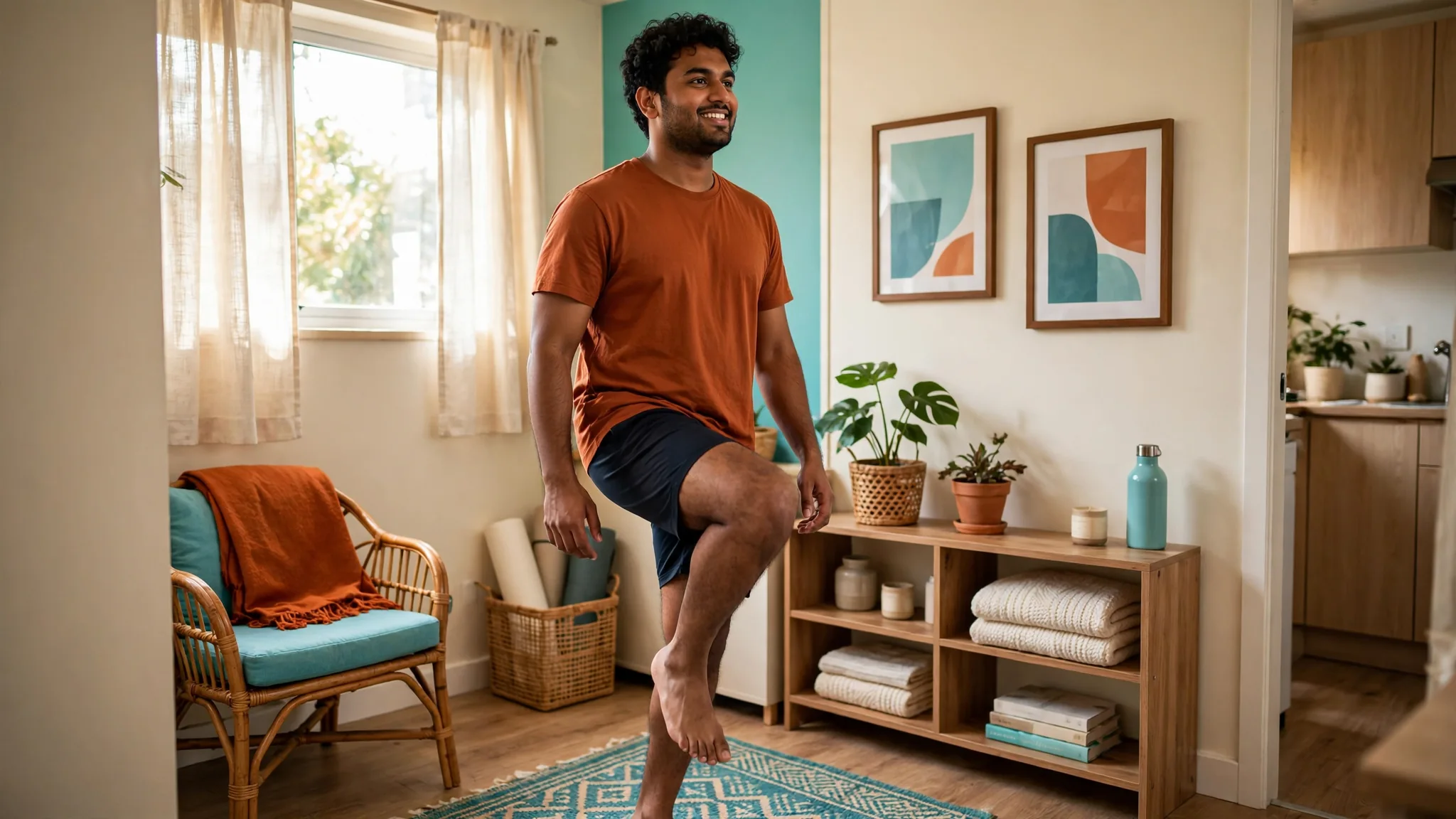
Do 10-Minute Workouts Count?
A practical look at short sessions, consistency, and what they can realistically do.
Jump to the workouts
Short on time but wondering if a quick session is worth changing for? Yes — a focused 10 to 15 minutes of movement can count toward an active week, lift your mood, and build consistency.
The trick is knowing what those minutes do best. Brisk cardio adds to aerobic time, while bodyweight moves build strength skill. Here is how to use both without overthinking it.
Start here.
- Short bouts of activity can add up across the day and week for generally healthy adults.
- Aerobic minutes and strength sessions do different jobs — most adults benefit from both.
- A simple starter mix of cardio days and full-body strength days makes 10-minute efforts count.
Why Short Bouts Still Count
For generally healthy adults, total active time across the week matters more than one perfect workout. A brisk 10-minute walk, bike ride, or living-room cardio session raises heart rate and breaks up long sitting blocks.
Consistency is the other win. It is easier to repeat a short session three to four times per week than to wait for a free hour. Think of 10 minutes as a building block, not a pass or fail test.
Aerobic Minutes Vs. Strength Sessions: What Is Different?
Aerobic activity is rhythmic movement that gets you breathing a little harder, like marching, dancing, cycling, or doing jumping jacks. Short cardio bouts add to your weekly aerobic total when done at a light to moderate effort you can sustain.
Strength work is different. Moves like squats, knee push-ups, glute bridges, and holds build muscle control and technique. Try First Full-Body Session and follow the app’s timed sets and rest prompts rather than inventing your own reps.
If a little structure helps you take the next step, SweatBud (free iPhone app) can shape workout plans around your time and experience.
- Aerobic goal: move continuously, breathe harder, finish feeling warmed up
- Strength goal: practice form, use controlled effort, follow the app instructions for sets and rest
- Both count, but one cardio burst does not replace strength training, and vice versa
When 10 Minutes Works Best
Short sessions shine on busy days, low-energy days, and restart days. A quick morning circuit can wake you up, a lunch-break walk can reset focus, and an evening bodyweight round can protect a streak without wiping you out.
They also work well as add-ons. Pair a 10-minute walk with stairs, yard work, or playing with kids. For children, activity needs and guidance differ from adult advice, so families should follow pediatric guidance separately.
Two Simple Formats To Try At Home
For cardio, pick low-joint-stress moves you can keep moving through. Low Impact Cardio uses bodyweight moves like jumping jacks, seal jacks, crab walks, and shuffles in 30-second blocks across about 14 minutes, with warm-up and cool-down included.
For strength, choose four to five basic moves and practice clean reps. Follow the app’s coaching for timing, breathing, and rest, and stop if form fades. Short does not mean rushed — controlled is what makes it useful.
- No equipment needed: both featured sessions use bodyweight only
- Beginner-friendly length: about 13 to 14 minutes estimated
- Space tip: clear a mat-sized area and keep water nearby
A Realistic Starter Plan Without Burnout
Aim for a repeatable week, not a perfect week. Alternate short cardio days with short full-body strength days, and leave at least one easier day for walking, stretching, or rest. If you miss a day, just pick up the next one.
Increase slowly by adding one extra session per week or a few extra minutes when energy allows. Talk with a health professional before starting if you have a heart condition, chest pain, dizziness, joint injury, or are managing a chronic condition or pregnancy.
- Week template: 2 cardio days + 2 strength days + daily short walks as able
- Effort check: you can talk in short sentences during moderate cardio
- Recovery check: soreness should ease within a day or two and not limit daily tasks
Find your next move.
Open a guide for the exercise order, instructions, sets, and rest periods. The listed times are estimates; take the rest you need.
Loading workout details…
A few good questions.
Does one 10-minute workout meet weekly activity recommendations?
No. For adults, one short session is a helpful start but not the whole week. Think in weekly totals that mix regular aerobic movement with strength sessions, and build gradually.
Is it better to do one longer workout or several short ones?
The better choice is the one you will repeat safely. Several short sessions can fit busy schedules, while a longer session may suit weekends. Many people use both across the week.
Further reading
Please consult a qualified healthcare or fitness professional before starting or changing an exercise routine, especially if you have an injury, health condition, balance concerns, or are pregnant or returning after childbirth. This article provides general education, not individualized medical advice. Choose age-appropriate activity and stop if an exercise causes pain, dizziness, or unusual symptoms.