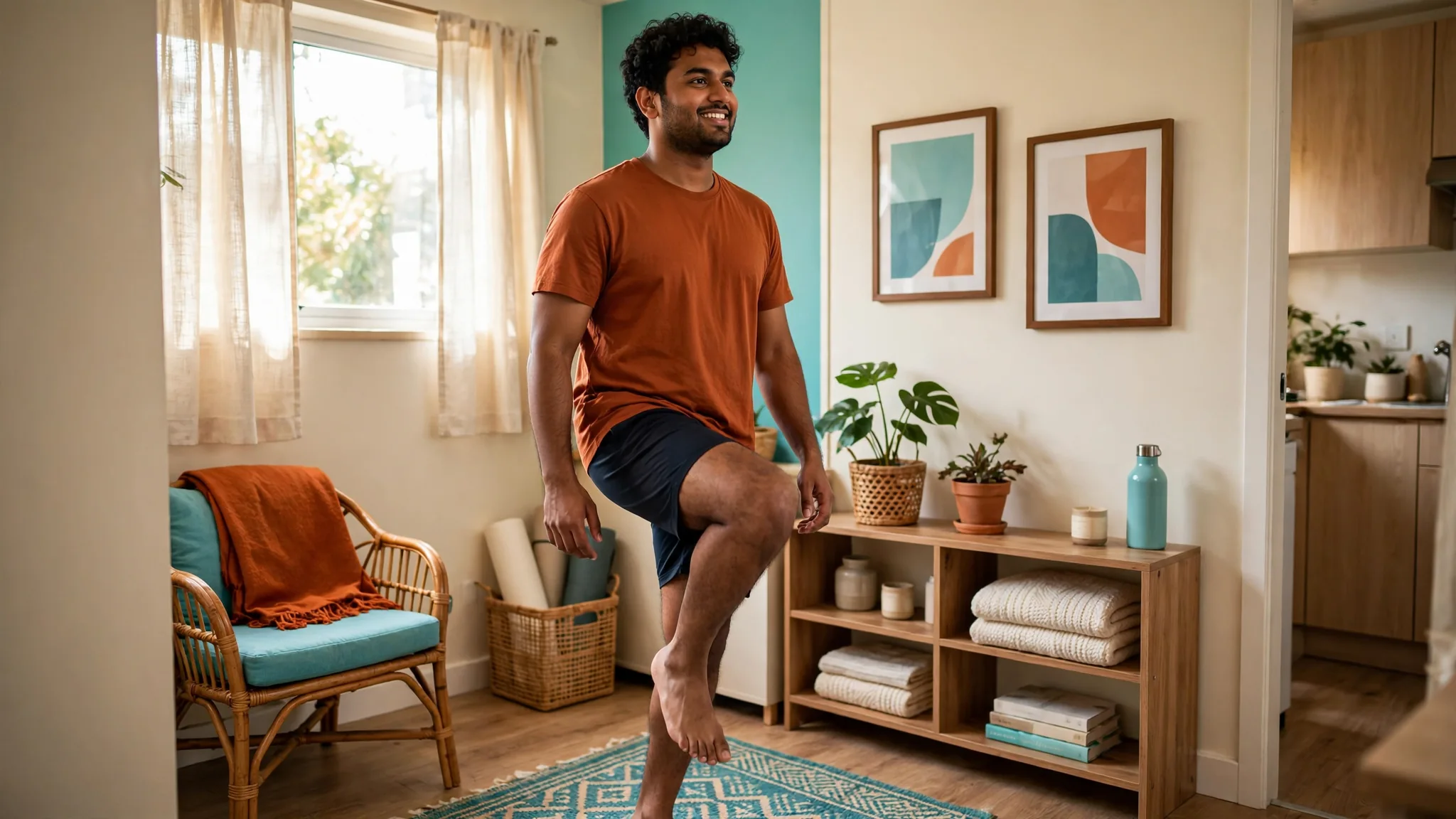
Haven’t Exercised in Years? Start Here.
A low-pressure way to return to movement after a long break.
Jump to the workouts
Coming back to movement after years away can feel awkward, hopeful, and a little nerve-wracking all at once. You do not need to get back your old routine or prove anything in week one.
This guide is for adults starting fresh. Think small first session, easy pacing, and a calm plan for next week, with room to adapt for age, ability, and health needs.
Start here.
- Start with a short, gentle session and stop with energy to spare.
- Mild muscle soreness differs from sharp pain, chest symptoms, or dizziness.
- Build week two by repeating what felt doable, then adding a little.
First, Check Your Starting Context
Returning after years away is about more than fitness level. Consider sleep, stress, ongoing health conditions, medications, recent illness, injury, surgery, or pregnancy. If activity has been limited by a clinician, check in before starting.
Most healthy adults can begin with gentle movement, but get prompt care for chest pain or pressure, fainting, unusual shortness of breath, or dizziness. When in doubt, a clinician or physical therapist can help you choose a safe entry point.
- Pause and seek advice if you have an uncontrolled condition or new symptoms
- Bring a medication list and joint or balance concerns to an appointment
- Plan for supportive shoes, water, light, and a clear floor space
- This article is general adult information, not medical advice or diagnosis
Make Session One Deliberately Small
A good first session feels almost too easy. Ten to fifteen minutes of easy mobility and basic strength is plenty to learn how your body responds. Follow the app’s instructions for timing and form rather than inventing your own sets and reps.
Try Morning Mobility for a 10-minute, bodyweight gentle reset with neck, shoulder, hip, and leg stretches. If joints feel okay and energy is good, you could later try part of a short strength day.
If a little structure helps you take the next step, SweatBud (free iPhone app) can shape workout plans around your time and experience.
When You Feel Ready, Try Gentle Strength
Bodyweight basics let you practice balance, pushing, squatting, and core control without equipment. Move slowly, breathe throughout, and rest between moves whenever you need it. Mild effort where you could still talk is a smart target.
The 13-minute beginner First Full-Body Session includes arm swings, bodyweight squats, knee push-ups, glute bridges, and a dead bug hold. Follow the app’s 35 to 40-second intervals, shorten the range of motion, or stop early if form fades.
- Use a chair, wall, or countertop for balance during squats
- Do knee push-ups to a comfortable depth, not to failure
- Lift hips only as high as feels stable during glute bridges
- Skip floor moves if getting up and down feels unsafe
Pace Yourself and Plan Next Week Lightly
Soreness often peaks one to two days later, so avoid stacking hard days at first. Many people do well with two short sessions in week one, separated by one or two easier days with walking, stretching, or rest.
For week two, repeat what felt manageable before adding more. That might mean the same session twice, a few extra minutes, or one additional day. Consistency matters more than intensity when rebuilding a habit.
- Leave one to two reps or a little energy in reserve
- Expect some huffing, but you should recover quickly after stopping
- Track sleep, joint comfort, and energy, not just performance
- For children and teens, follow pediatric and school guidance separately; this pacing advice is written for adults
Soreness vs. Warning Signs
Mild, even muscle awareness a day later is common after a restart and usually eases with light movement and sleep. Sharp, shooting, or joint pain, swelling, popping with pain, numbness, or pain that worsens after two to three days deserves attention.
Stop and seek care for chest discomfort, faintness, severe breathlessness, irregular heartbeat, or a fall. Older adults, people with disabilities, osteoporosis, arthritis, diabetes, heart disease, or balance issues should ask a clinician about sensible limits and referrals.
- Adapting is smart: seated options, smaller ranges, longer rests, and support
- Red flags mean stop, rest, and get medical advice promptly
- No stretching or strengthening should force through sharp pain
Find your next move.
Open a guide for the exercise order, instructions, sets, and rest periods. The listed times are estimates; take the rest you need.
Loading workout details…
A few good questions.
How sore should I expect to be?
Light stiffness or tender muscles for a day or two can be normal after restarting. It should improve with gentle movement. Sharp pain, joint swelling, numbness, or symptoms that worsen need rest and professional advice.
How often should I exercise at first?
Many adults start with two short sessions per week plus light daily movement. If recovery feels good after one to two weeks, add a little time or one session. There is no fixed timeline.
Further reading
Please consult a qualified healthcare or fitness professional before starting or changing an exercise routine, especially if you have an injury, health condition, balance concerns, or are pregnant or returning after childbirth. This article provides general education, not individualized medical advice. Choose age-appropriate activity and stop if an exercise causes pain, dizziness, or unusual symptoms.