Can’t Do One Push-Up? Read This.
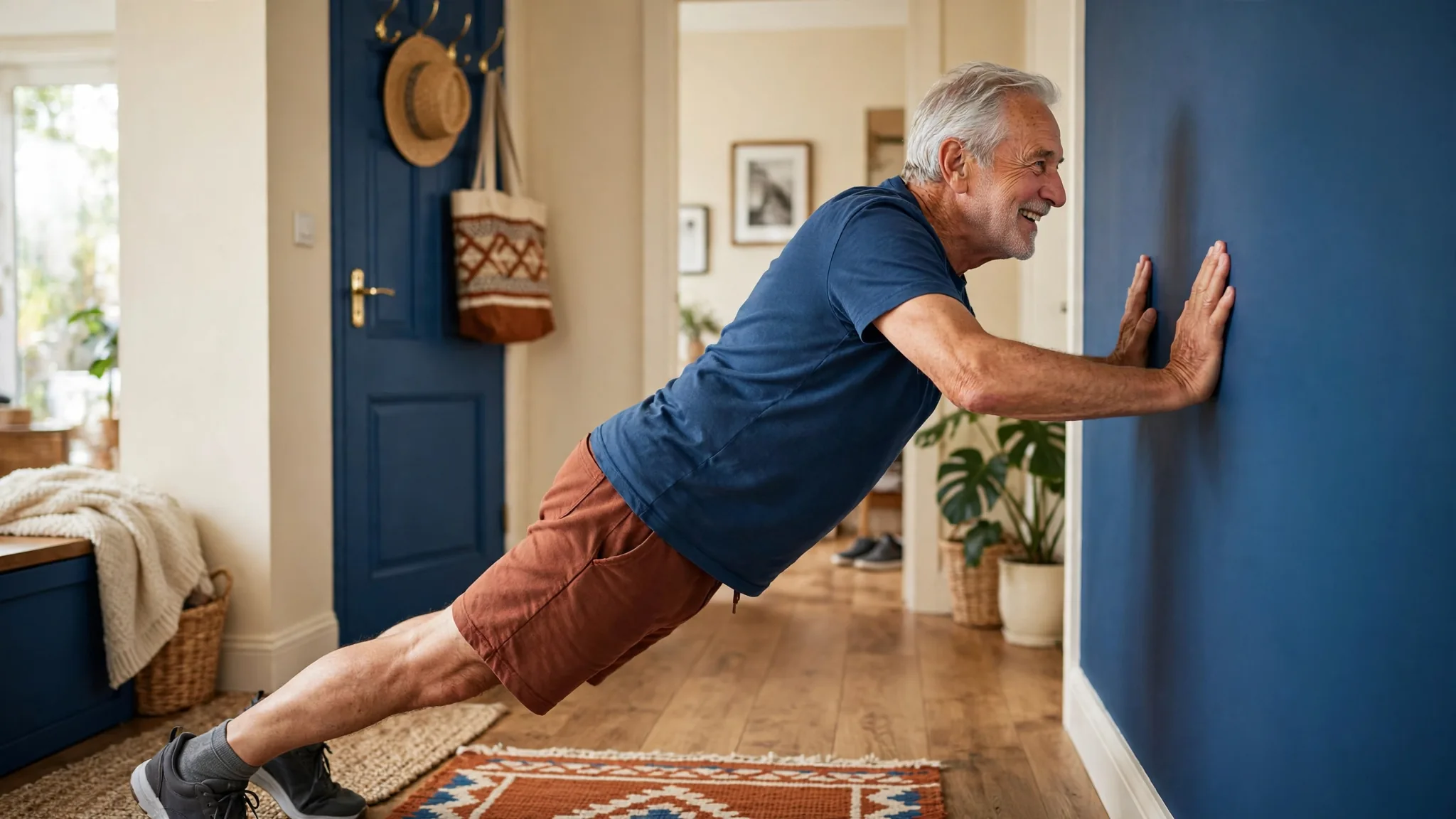
Incline variations let you practice the pattern at a level you can control.
Jump to the workouts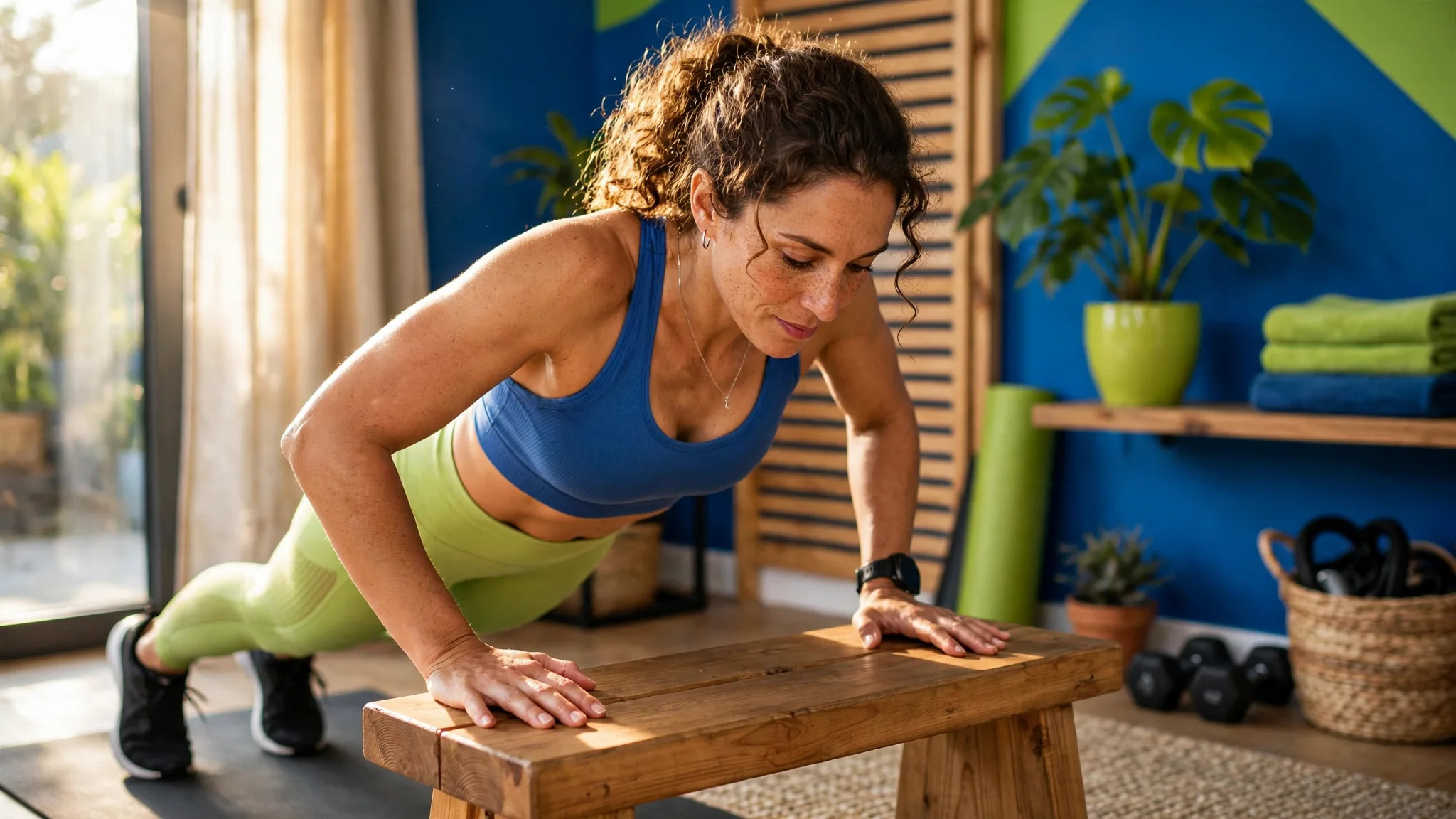
Not getting off the floor on rep one does not mean you lack upper-body strength. A full push-up moves a large share of your bodyweight through a long range, so starting there is like opening with the heaviest option first.
The smarter path is to start high, get stable, and earn lower angles over time. A little warm-up, incline practice, and supportive floor work can build the coordination and control you need.
Start here.
- Start with high, stable inclines and lower the surface only when form stays clean.
- Quality reps with a strong plank line matter more than grinding tired reps.
- Warm-ups like jumping jacks and cooldown floor work support better push-up practice.
Why Push-Ups Feel Impossible At First
A push-up asks your chest, shoulders, triceps, and trunk to work as one unit. If your hips sag, your neck cranes, or your elbows flare wide, the move leaks energy fast. That is a skill issue, not a character flaw.
Floor push-ups also demand wrist comfort, core stiffness, and pressing strength together. Breaking the skill into incline reps, knee-supported reps, and trunk holds lets each piece catch up without turning every set into a struggle.
Start High And Stay Stable
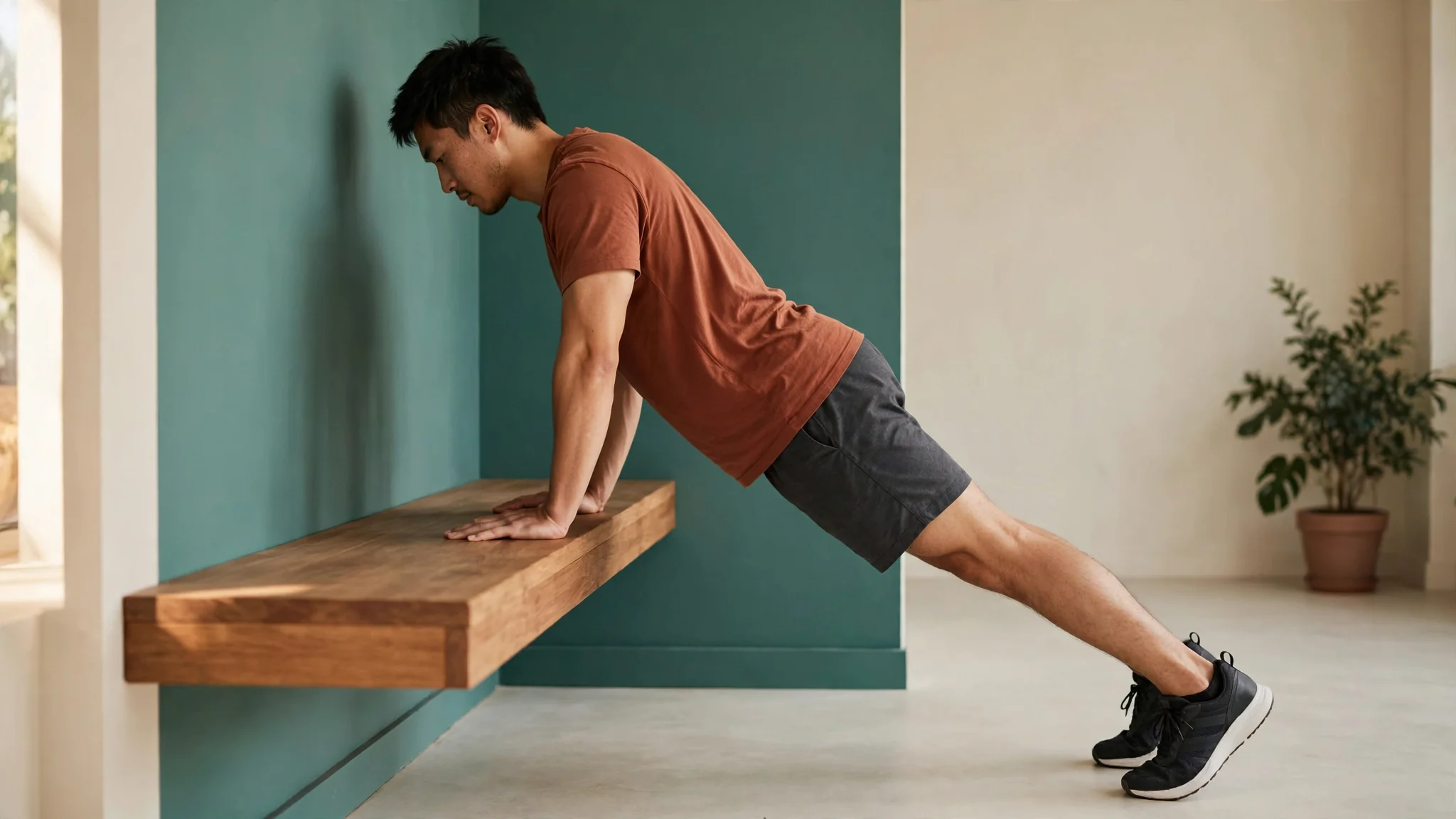
Pick a sturdy surface that will not slide, tip, or wobble: a wall, countertop, solid table, sturdy bench, or low step. Place hands wide enough to keep wrists comfortable, brace your trunk, and lower with control before pressing smoothly back up.
When you can finish your planned reps with steady breathing and a straight line from head to heels, try a slightly lower surface. Small drops count. Follow the app’s instructions for sets, reps, and rest in Push-Up Starter rather than inventing extra volume.
When you are ready to plan the next bodyweight session, SweatBud (free iPhone app) can shape workouts around your experience and available time.
- Check stability first: no rolling chairs, slick counters, or wobbly rails.
- Keep ribs down, glutes engaged, and neck long.
- Stop the set when hips sag or shoulders shrug toward ears.
Your Starter Is More Than Push-Ups
A good beginner session warms you up, practices pressing, then helps you cool down. That is why jumping jacks and floor-based moves belong next to incline push-ups. They raise your heart rate, wake up the shoulders, and give the trunk and hips some attention too.
- Arm swings and Jumping Jack warm up shoulders and breathing before pressing.
- Inclined push up, Knee push ups, and Reverse push ups practice pressing at friendlier angles.
- Fire Hydrant Circles and Hip hinge add controlled floor work for hips and posture after the main sets.
Quality Reps Beat Grinding Reps
Think tall plank, slow lowering, and quiet landings. Lower for about two counts, pause without collapsing, then press the floor away. Keep elbows about 30 to 45 degrees from your torso and look slightly ahead, not straight down.
Two clean incline reps teach more than ten rushed ones. For variety, Incline Press & Plank pairs timed incline work with Plank on Hands and upper-back focused Reverse Snow Angels. Use the app timer and cues instead of guessing sets.
A Simple Weekly Way To Practice
You do not need daily max-outs or a promised push-up date. Pick two or three non-consecutive days, warm up briefly, do your incline and trunk work, then stretch and walk around. Progress comes from repeatable form, not soreness.
- Day A: Push-Up Starter style session with higher incline and knee-supported reps.
- Day B: rest, walk, or gentle mobility; check for lingering shoulder, wrist, or low-back irritation.
- Day C: Incline Press and Plank style session, then reassess whether a slightly lower surface still looks clean.
Find your next move.
Open a guide for the exercise order, instructions, sets, and rest periods. The listed times are estimates; take the rest you need.
Loading workout details…
A few good questions.
What if my wrists hurt during push-ups?
Try a higher incline, spread fingers comfortably, and keep wrists stacked rather than bent back. Reduce range or volume for the day. If pain is sharp, swelling, or persistent, pause pressing and talk with a qualified health professional.
How do I know when to lower the incline?
Lower it when your current height feels controlled from first rep to last, with no sagging hips or rushed reps. Drop only one small step at a time and keep the same clean form before progressing again.
Further reading
Please consult a qualified healthcare or fitness professional before starting or changing an exercise routine, especially if you have an injury, health condition, balance concerns, or are pregnant or returning after childbirth. This article provides general education, not individualized medical advice. Choose age-appropriate activity and stop if an exercise causes pain, dizziness, or unusual symptoms.