A stronger core starts with control.
Learn how to scale core training and choose steady movement over longer holds.
Jump to the workouts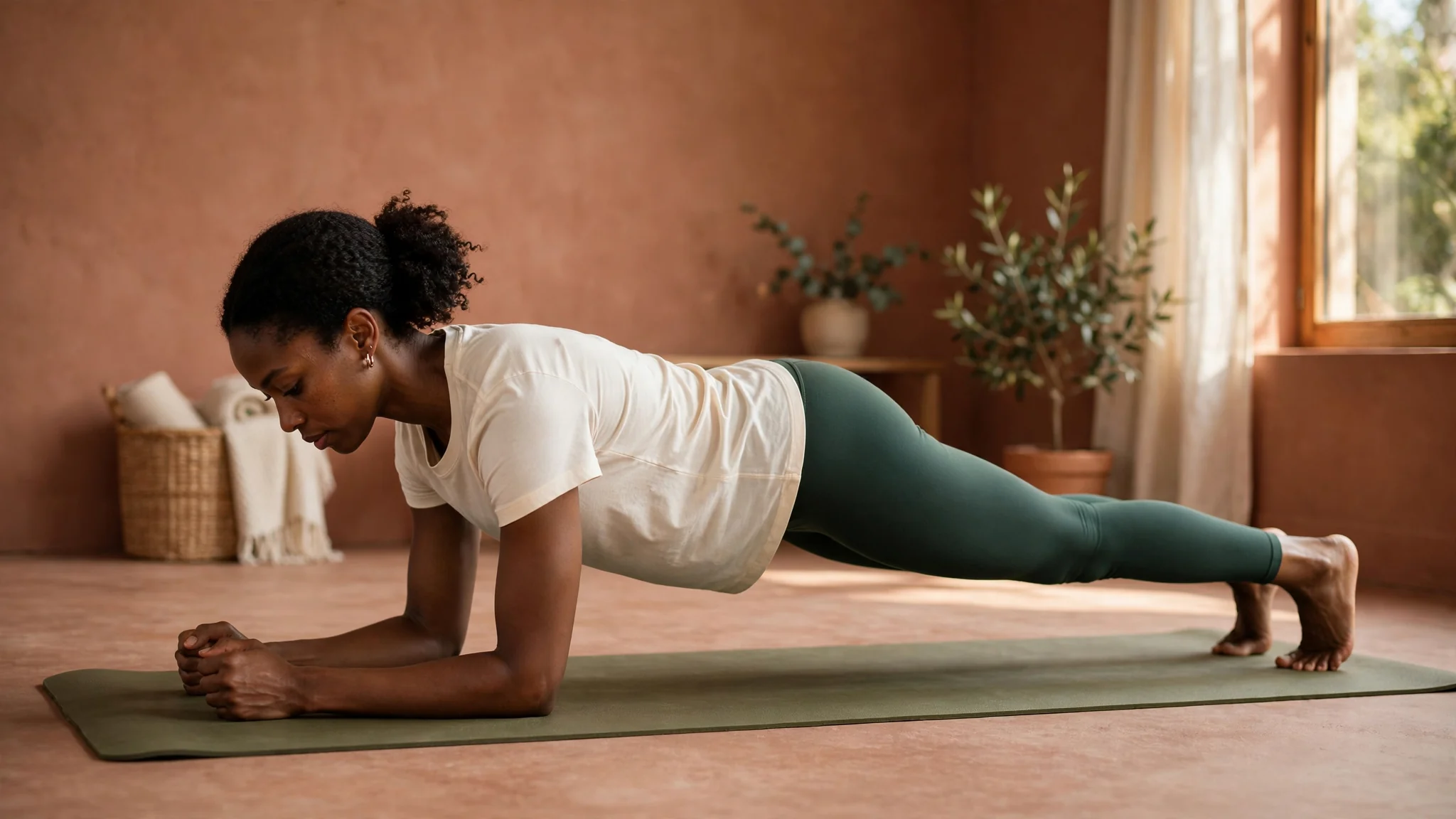
A stronger core is less about doing more reps and more about moving with control. When your trunk stays steady while arms and legs move, everyday tasks like carrying groceries, gardening, and getting up from the floor can feel more supported.
This guide walks through steady holds, calm breathing, and simple ways to adjust effort. You will learn how to approach the Dead Bug Hold, explore plank options, and decide when to skip a harder variation.
Start here.
- Core control means keeping your trunk steady while you breathe normally and move limbs smoothly.
- The Dead Bug Hold is a still hold with lower back gently in contact with the floor, and short quality efforts work well.
- The library Plank is on hands, a knee-supported version is an adaptation you can try, and the side arm reach can be skipped if it feels too demanding.
What core control really means
Control means your ribs, pelvis, and lower back stay relatively quiet while your arms or legs do the work. Think smooth and even rather than braced rigid or rushed. Small ranges with good form often teach more than long, wobbly holds.
A session like First Full-Body Session places a short Dead Bug Hold alongside squats, knee push-ups, and glute bridges. That mix lets you practice trunk steadiness, then use it in larger movements. Open the full library instructions to follow the listed order and timing.
When you choose your next core session, SweatBud (free iPhone app) can help plan a workout around your experience and equipment.
- Choose a firm, comfortable surface with room to extend arms and legs
- Start with shorter efforts and reset and shorten if you notice breath-holding
- Stop the movement if you feel sharp pain or dizziness
Breathe normally and find a comfortable position
Try to breathe in and out through your nose or relaxed lips during holds. If you notice you are holding your breath, reset, shorten the effort, and begin again. Continuous breathing helps you notice tension in your shoulders, jaw, and hips.
Lie on your back with knees bent and feet flat to start. Notice your lower back resting gently in contact with the floor without forcing it flat. Keep your ribs heavy and shoulders relaxed, and avoid straining to hold a position.
How to practice the Dead Bug Hold
The Dead Bug Hold in the library is a still hold, not alternating arm and leg extensions. Typically you press your arms toward the ceiling and lift bent legs, with lower back gently in contact with the floor. Hold steady while breathing normally and keeping your neck long.
You can explore this hold in Dead Bug & Plank Practice, which lists two 35-second efforts. If that feels long, try 15 to 20 seconds with full rest between efforts. Reset if your back arches strongly or your shoulders creep toward your ears.
- Arms reach upward with elbows soft, not locked
- Knees stay above hips with shins roughly level if comfortable
- Press gently through the upper back and keep the pelvis steady
Plank options and kind adaptations
The library Plank is performed from the hands and toes in a full plank position. A forearm plank is a separate optional variation, not the listed version. If the hands-and-toes position feels like too much, a knee-supported plank is one adaptation many people try.
With knees on the floor, aim for a straight line from head to knees. Keep hips level and breathe steadily throughout. Short efforts with rest often work better than one long hold. Pause if your lower back sags or you cannot breathe normally.
You can also elevate your hands on a sturdy step or bench to reduce demand while you build familiarity. Rest on your knees between efforts and gently shake out the wrists. Open the full library instructions for the listed timing and order.
- Check head, shoulders, hips, and heels in one gentle line for the full version
- Think tall through the spine without clenching hard
- Rest on your knees between efforts and reset if form slips
Handling the harder side reach variation
Plank Side Arm Reach Dynamic adds rotation and balance challenge, so it feels harder than a basic hold. It is okay to skip it while you build consistency, especially if your hips rock side to side or your shoulder feels unstable. You can repeat the Dead Bug Hold or basic plank instead.
For a simple flow, open First Full-Body Session for a full-body mix or Dead Bug & Plank Practice for focused trunk practice. Follow the listed warm-up and cooldown stretches, and keep total effort comfortable enough to repeat another day.
- Warm up with the listed arm swings and arm circles
- Choose one or two core holds per session at first
- Finish with the neck stretch and child pose stretch as listed
Find your next move.
Open a guide for the exercise order, instructions, sets, and rest periods. The listed times are estimates; take the rest you need.
Loading workout details…
A few good questions.
How long should I hold if 35 seconds feels like too much?
Shorten the effort to a time where you can breathe normally and keep good shape, such as 15 to 20 seconds. Rest fully, then repeat if form stays steady. Over sessions, add a few seconds only when the current length feels manageable.
What should I do if my back or shoulders bother me during holds?
Stop the movement that causes discomfort for the day and avoid pushing into pain. Reset your position and rest. If discomfort persists or concerns you, consider speaking with a qualified professional for personalized guidance.
Further reading
Please consult a qualified healthcare or fitness professional before starting or changing an exercise routine, especially if you have an injury, health condition, balance concerns, or are pregnant or returning after childbirth. This article provides general education, not individualized medical advice. Choose age-appropriate activity and stop if an exercise causes pain, dizziness, or unusual symptoms.