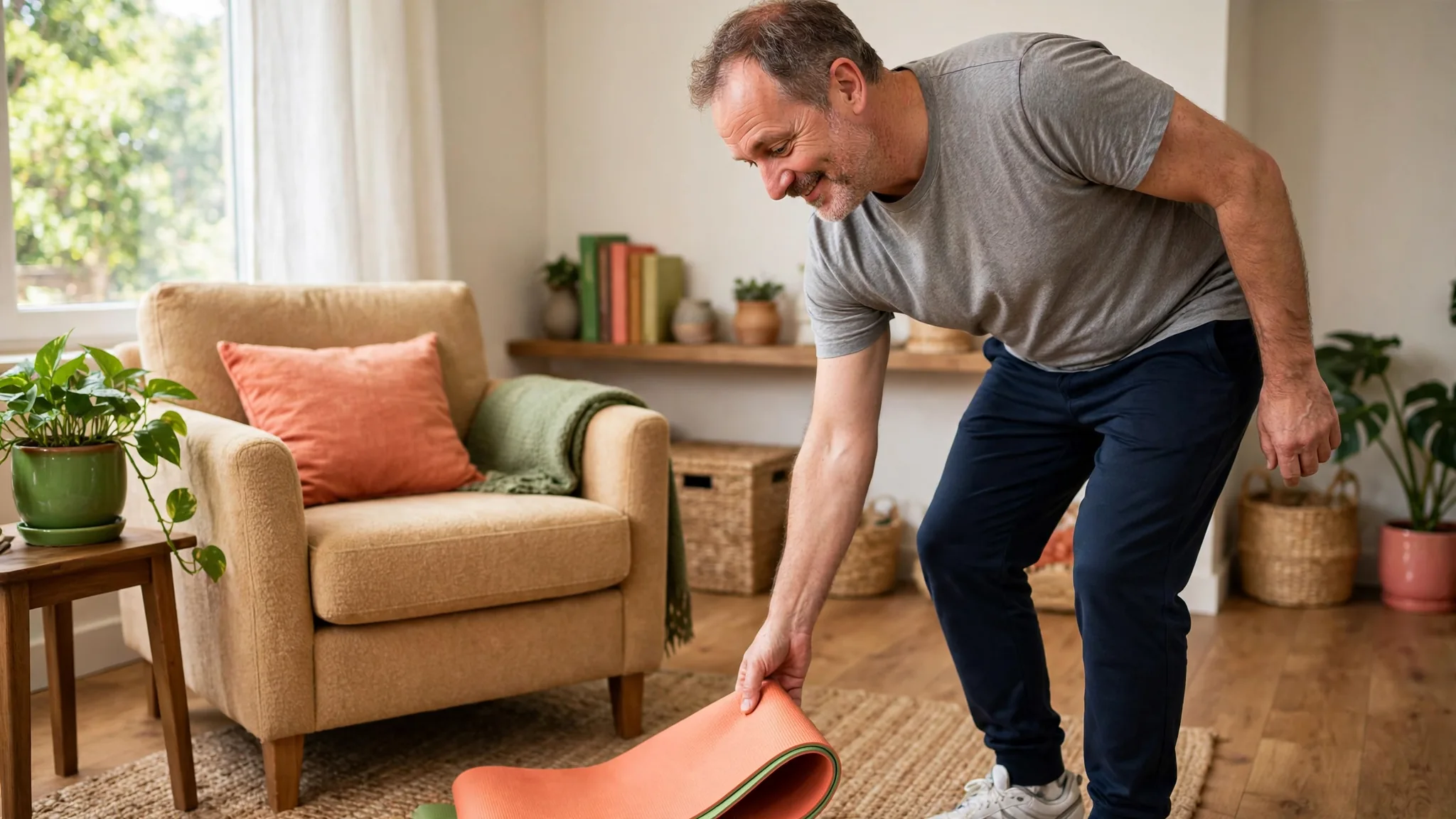
Make strength part of your next chapter.
Adapt movement to your experience, balance, and energy—not someone else’s pace.
Jump to the workouts
Strength can feel different in midlife and beyond. Everyday tasks like rising from a chair, carrying groceries, or climbing stairs ask for leg power, balance, and confidence. Small, steady practice can help you stay active in the ways that matter to you.
This guide centers older adults while welcoming all genders, ages, and abilities. You will find gentle starting points, ability-aware ways to adapt, and ideas for building a balanced week without pressure or rigid rules.
Start here.
- General guidance encourages muscle strengthening on 2 or more days, weekly aerobic activity, and balance work for older adults, adapted to your abilities.
- A chair or wall for support, shorter ranges of motion, and rest breaks can make standing leg work more comfortable.
- Short sessions like Upright Leg Foundations and Upright Movement Break can fit into a flexible routine.
Why strength matters in this chapter
Strong legs support independence. Squatting, hinging, pushing up from sitting, and steadying yourself on uneven ground all draw on the hips, thighs, and calves. Keeping those muscles engaged can make daily movement feel smoother and more assured.
Balance deserves equal attention. Calf strength, ankle awareness, and practiced weight shifts help with curbs, steps, and quick direction changes. If you use a cane, walker, or sturdy furniture, keep it close and adapt openly.
- Choose clear floor space and supportive footwear or bare feet on a non-slip surface
- Keep water, glasses, and any mobility aids within reach
- Stop and rest if you feel dizzy, unusually short of breath, or unsteady
What a balanced week can look like
For adults, the CDC points toward at least 150 minutes of moderate aerobic activity per week, muscle-strengthening activities on 2 or more days that work major muscle groups, plus balance activities for older adults. Smaller bouts count, and some movement is better than none.
You do not need to meet all of this at once. A sample rhythm might pair two short strength days with walks, dancing, gardening, or cycling spread through the week. Open the full library instructions for Upright Leg Foundations to see how one leg-focused day is organized.
If a flexible plan helps you keep strength work in the week, SweatBud (free iPhone app) can shape workouts around your time and equipment.
- Strength: 2 days with rest or lighter activity between, covering legs, hips, trunk, arms, and shoulders over time
- Aerobic: brisk walks or other enjoyable movement in chunks of 10 to 20 minutes
- Balance: heel raises, tandem stance practice, or tai chi style weight shifts as able
Start supported and comfortable
Support changes everything. Place a sturdy chair or counter beside you for squats, hip hinges, and calf raises. Use a light touch for balance, and more support when trying a new range. Shorter bends, slower tempo, and extra breaths between intervals are all valid adaptations.
The sequence in Upright Leg Foundations moves from arm circles into bodyweight squats, hip hinges, calf raise intervals, and arm swings before standing quad stretches. Preview the moves first, then follow the timed intervals at an effort that lets you stay steady and breathe easily.
- Bodyweight squat: hold chair back, sit hips back slightly, keep knees tracking over feet, limit depth
- Hip hinge: soft knees, long spine, push hips back with hands sliding toward thighs, pause upright for balance
- Calf raise intervals: hold support, lift heels low, alternate work and rest, stay near support throughout
When a shorter day fits better
Energy varies, and a lighter day still counts. A brief mobility session can ease stiffness from sitting, warm up joints, and add gentle calf and shoulder activity without floor work or equipment.
Try Upright Movement Break on busy days or as a warm-up before a walk. It includes wrist rotations, neck stretches, arm swings, arm circles, and calf raise intervals, all standing and bodyweight-only.
- Use slow neck stretches with tall posture and relaxed shoulders, avoiding forcing range
- Make arm swings and circles smaller if shoulders feel sensitive
- Do calf raises near a wall if balance feels uncertain that day
A note for families and young people
Children and teens have different needs than adults. Ages 6 to 17 benefit from about 60 minutes per day of age-appropriate, enjoyable activity, while younger children thrive through active play across the day. Adult sets, frequencies, and strength sessions are not designed for kids.
If young people join you, keep it playful and separate from your workout. Invite them to dance, walk, bike, or play with a caregiver or qualified instructor guiding form and fun, then return to your own routine at your own pace.
Make it yours and keep going
Consistency grows from fit, not force. Link strength to an existing habit, like after morning tea or before lunch. Keep a simple journal note about support used, comfort, and what felt steady, then adjust next time rather than pushing through fatigue.
Review progress every few weeks. If squats feel smoother, you might reduce hand support slightly or add a few seconds of work. If joints feel achy afterward, shorten the range, add rest days, or ask a qualified professional for personalized guidance.
- Track: date, session, support level, effort from 1 to 10, and any joint feedback
- Rotate: alternate leg focus with upper body, walking, and balance practice
- Refresh: revisit instructions, swap music, or invite a friend for company
Find your next move.
Open a guide for the exercise order, instructions, sets, and rest periods. The listed times are estimates; take the rest you need.
Loading workout details…
A few good questions.
How often should older adults do strength work?
General guidance suggests muscle-strengthening on 2 or more days per week plus aerobic and balance activities, adapted to abilities and health conditions. Start with one or two short supported sessions, rest between hard days, and build gradually with professional input when needed.
What if squats or standing stretches feel too hard?
Shorten the range, hold a sturdy chair with both hands, take longer rests, or skip a move that causes pain, dizziness, or unsteadiness. Seated alternatives, wall support, and fewer intervals keep the session useful while you build confidence.
Further reading
Please consult a qualified healthcare or fitness professional before starting or changing an exercise routine, especially if you have an injury, health condition, balance concerns, or are pregnant or returning after childbirth. This article provides general education, not individualized medical advice. Choose age-appropriate activity and stop if an exercise causes pain, dizziness, or unusual symptoms.