Why Home Workouts Never Happen
A few simple environment tweaks can lower the friction between plan and first rep.
Jump to the workouts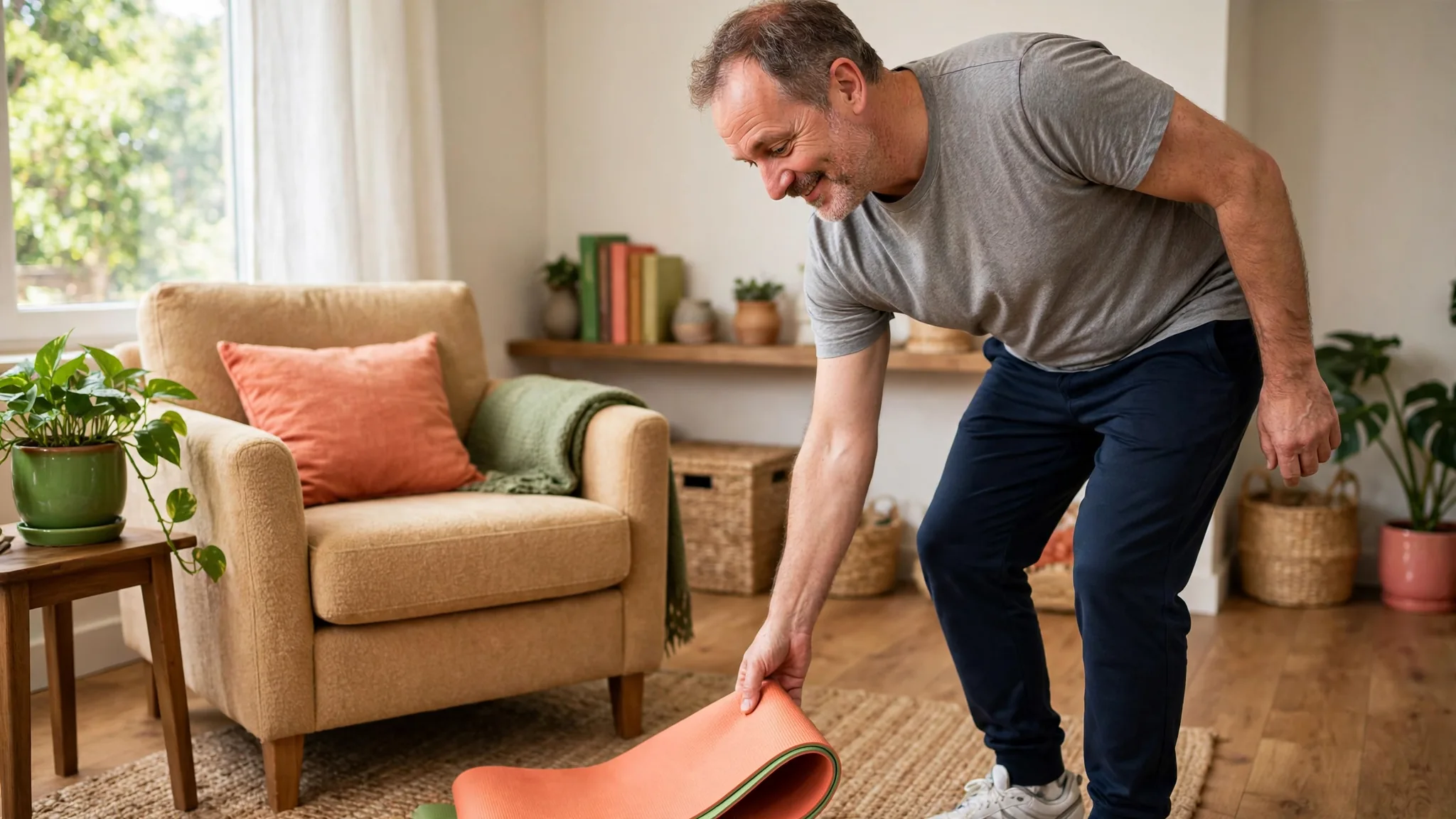
Most home workouts do not fail because people do not care. They fail because the plan needs too many decisions at the exact moment energy is lowest. The mat is in a closet, the routine is vague, and forty minutes feels impossible after work.
The fix is behavioral design, not tougher motivation. A clear cue, a tiny space that is ready to use, and a fallback option can keep movement in the day. Think smaller setup, clearer start, and less negotiation with yourself.
Start here.
- Link movement to an existing cue like lunch, a work break, or changing clothes.
- Keep a ready-to-use corner and a 9-minute fallback so starting feels easy.
- Use short guided sessions and follow the app timing instead of improvising sets.
It Is Usually Friction, Not Motivation
A realistic habit loop has three parts: a cue that reminds you, a routine that is easy to start, and a finish that feels complete. Home routines often miss all three. No set time, too many exercise choices, and no clear stopping point make skipping the rational choice.
Blame makes this worse. Missing one long workout can feel like failure, so people pause for weeks. A design approach asks a kinder question instead: how could this take less space, less time, and fewer decisions tomorrow?
- Vague plan: work out later versus after lunch in the living room
- Hidden equipment: mat, band, or shoes stored out of sight
- Oversized session: only counts if it is sweaty and long
Pick A Cue You Already Trust
Motivation fades, but daily anchors repeat. Coffee brewing, a lunch break, a show intro, or changing out of work clothes can all signal movement time. The cue should be specific, daily, and attached to something that already happens without effort.
Say it plainly: After I close my laptop for lunch, I will unroll my mat. That kind of if-then wording removes debate. If the cue changes on weekends, choose a second anchor rather than leaving it to chance.
Shrink The Start Until It Feels Almost Too Easy
Many people need a session that fits a crowded day, not an ideal day. A short guided option like Upright Movement Break can work as a planned minimum because it is beginner-friendly, bodyweight-only, and about nine minutes with wrist, neck, arm, and calf movements.
A plan built around the space and gear you actually have can make home sessions easier to repeat; SweatBud (free iPhone app) can adapt workouts to your time and equipment.
Open the workout and follow the app's instructions for intervals and rest rather than making up sets. A complete short session protects momentum better than half of an ambitious plan abandoned midway through.
- Define your minimum: one short break, not a full routine
- Lay out clothes, water, and a clear floor spot the night before
- Start with warmup moves only if that is what gets you moving
Make Your Space Invite Movement
You do not need a home gym. You need a low-friction corner with enough room to squat, kneel, and stretch your arms. Keep the mat unrolled or leaning nearby, silence notifications, and face away from clutter or screens if you can.
Pair the space with one main session for days with more time. First Full-Body Session is a beginner bodyweight option of about thirteen minutes with squats, knee push-ups, glute bridges, and gentle core and cooldown stretches.
- Clear a mat-sized zone near natural light if possible
- Store shoes, water, and a towel in the same spot
- Use headphones to mark focused time in shared homes
Build A Miss-Proof Week
Plan for interruptions instead of pretending they will not happen. Choose three anchor days for a fuller session and let the other days default to a movement break. Travel, late meetings, and low energy then change the dose, not the identity of someone who moves.
Track starts, not performance. A simple checkmark for showed up keeps attention on repetition. If you miss twice, shrink the cue, shorten the session, or move the time rather than adding pressure or extra rules.
For general adult activity, short bouts can still support an active routine when done regularly. This advice is for generally healthy adults managing everyday barriers; children need age-appropriate activity, supervision, and different guidance. Stop and seek professional advice for chest pain, dizziness, injury, or concerning symptoms.
- Anchor days: fuller session after work on Monday, Wednesday, Friday
- Busy days: short standing break between tasks
- Reset rule: if missed, do the smallest version next cue
Find your next move.
Open a guide for the exercise order, instructions, sets, and rest periods. The listed times are estimates; take the rest you need.
Loading workout details…
A few good questions.
What if I keep skipping evenings?
Move the cue earlier rather than trying harder at night. Try lunch, a work break, or right after changing clothes. Keep the same short session for two weeks so the start becomes automatic.
Should I do more if a short session feels easy?
Not necessarily. Finish the guided session as instructed, then stop or add a walk if you have energy. Consistency matters more than making one day harder, especially when rebuilding a routine.
Further reading
Please consult a qualified healthcare or fitness professional before starting or changing an exercise routine, especially if you have an injury, health condition, balance concerns, or are pregnant or returning after childbirth. This article provides general education, not individualized medical advice. Choose age-appropriate activity and stop if an exercise causes pain, dizziness, or unusual symptoms.