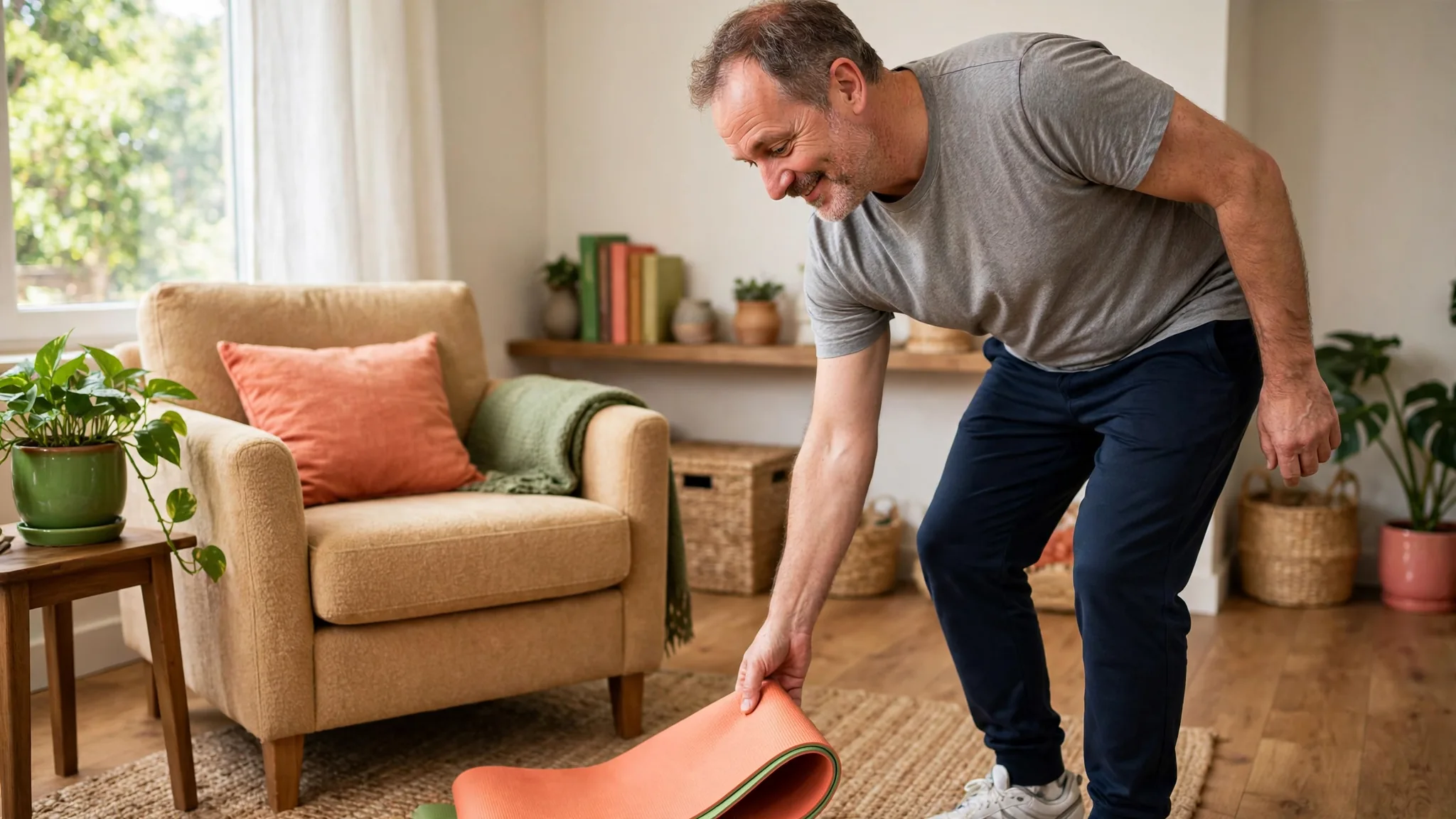
Make room for a little more movement.
Simple movement breaks that fit between meetings, errands, and everything else.
Jump to the workouts
Long hours at a desk can leave your shoulders tight, your hips stiff, and your energy flat by midafternoon. A short movement break will not replace your regular workouts, but it can add a welcome reset. Think circulation, posture variety, and a mental pause.
This guide compares two beginner bodyweight options so you can match your break to your space. One stays upright beside your chair, while the other uses the floor for hips and glutes. Open the full library instructions before you start to check setup and form cues.
Start here.
- Short desk breaks add variety to long sitting but do not replace longer workouts.
- The upright option needs only standing room; the desk reset needs floor space.
- Match your choice to space, comfort getting up and down, and time available.
Why small breaks help desk days
You do not need to change clothes or clear your schedule to move more during a workday. The Upright Movement Break uses standing wrist rotations, neck stretches, and arm swings to add variety after long sitting. Even a few minutes can help you reset focus before your next task.
For short movement sessions that fit around your day, SweatBud (free iPhone app) can help shape a workout plan around the time you have.
These breaks work best as a complement to longer activity, not a substitute. Pair them with walks, strength sessions, or activities you enjoy across the week. If sitting leaves you uncomfortable, consider adjusting chair height, screen position, and how often you stand throughout the day.
- Use breaks to change position, look away from the screen, and breathe deeply
- Keep intensity gentle so you can return to work without needing recovery
- Notice which areas feel stiff and choose a matching break next time
When staying upright makes sense
If you share an office, wear work clothes, or prefer not to get on the floor, an all-standing sequence is practical. The nine-minute Upright Movement Break stays vertical from start to finish, so you only need enough clear space to extend your arms and step in place beside your desk.
The sequence moves through wrist rotation, neck stretch, arm swings, straight arm circles, and calf raise intervals. Move slowly through the neck stretches and keep shoulders relaxed during circles. For calf raises, use a wall, desk edge, or sturdy chair for balance if needed.
- Push your chair back and check for bags, cords, or slippery rugs
- Start with smaller arm circles, then widen only if shoulders feel comfortable
- Alternate calf raise effort with marching in place if balance feels unsteady
When you have room for floor moves
If you have a mat, carpeted area, or quiet corner, you can include more hip and lower-body positions. The ten-minute Full Body Desk Reset begins with standing arm swings and neck stretches, then moves to the floor for the remaining stretches and mobility work.
Expect reverse snow angels, knee-to-chest stretches, butterfly stretch, figure-four stretches, and fire hydrant circles. Getting up and down and kneeling for hydrants takes more effort and space. Take your time with transitions and shorten the range if any position feels awkward.
- Allow a body-length of floor space plus room for arms and bent knees
- Keep a cushion or folded towel nearby for sensitive knees
- Skip or adapt floor moves if getting down and up is difficult for you
Set up your spot in a minute
A little preparation makes breaks more inviting and less disruptive. Keep supportive shoes or grippy socks nearby, clear a small lane beside your desk, and silence notifications for ten minutes. Open the full library instructions first so you can preview the exercise order and suggested timing.
For floor routines, check privacy, cleanliness, and lighting. A closed door, a mat unrolled in advance, and water within reach help you settle in quickly. For upright routines, test that you can swing and circle your arms without hitting shelves, monitors, or coworkers.
- Standing breaks: chair pushed in, headset on if following cues, stable footwear
- Floor breaks: mat, cushion, water, and space to lie on your back comfortably
- Shared spaces: face away from foot traffic and keep movements compact
Build a break habit that sticks
Link movement to an existing cue, such as after meetings, before lunch, or between tasks. One midmorning and one midafternoon break is a practical starting point for many desk workers. Set a gentle timer and treat the time as an appointment with yourself rather than an optional extra.
These sequences are designed for adults and are not presented as activities for children, who have different needs for daily play. Adults of varied ages and abilities can adapt range, pace, and support. Choose the upright option on busy days and save the floor sequence for when time and space allow.
- Start with two to three breaks per week, then add days if it feels helpful
- Keep a simple log of which break you chose and how you felt afterward
- Combine breaks with short walks, stairs, or outdoor light when possible
Find your next move.
Open a guide for the exercise order, instructions, sets, and rest periods. The listed times are estimates; take the rest you need.
Loading workout details…
A few good questions.
Which break should I choose today?
Choose based on space, clothing, and comfort with floor moves. Pick the upright break if you want to stay standing in a small area. Pick the desk reset if you have a mat and want more hip-focused floor positions.
Will these short breaks replace my workouts?
No. They add posture variety and brief activity during desk time, but longer walks, cardio, and strength sessions still matter. Think of breaks as a useful supplement that helps you move more often throughout the day.
Further reading
Please consult a qualified healthcare or fitness professional before starting or changing an exercise routine, especially if you have an injury, health condition, balance concerns, or are pregnant or returning after childbirth. This article provides general education, not individualized medical advice. Choose age-appropriate activity and stop if an exercise causes pain, dizziness, or unusual symptoms.