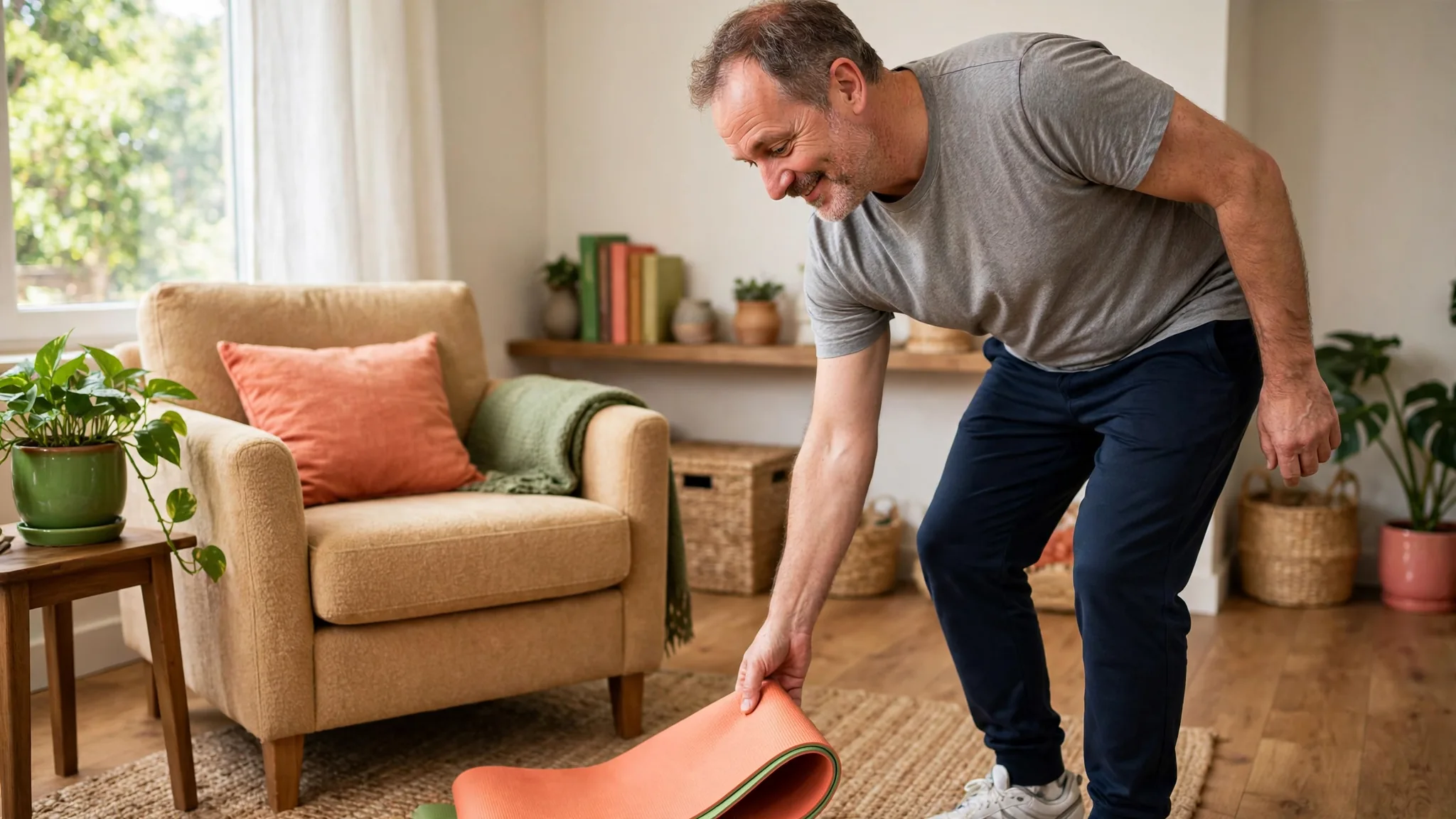
Your Balance Deserves Some Attention
Balance is a skill you can practice with support, clear space, and realistic expectations.
Jump to the workouts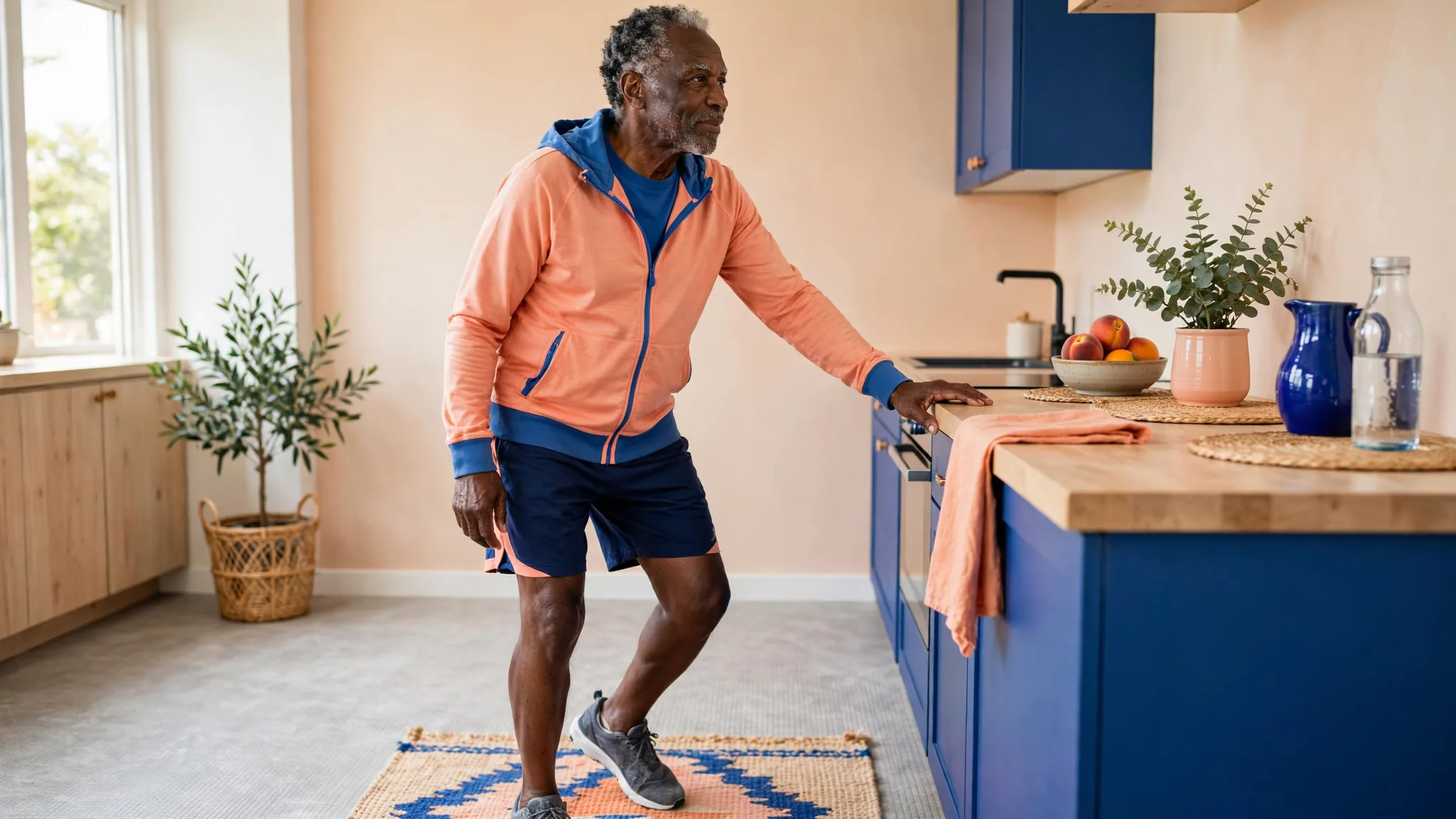
Balance can feel invisible until a wobbly step on the stairs or an uneven sidewalk gets your attention. After 40, strength, ankle stiffness, vision changes, and less daily movement can all make steadiness feel a little less automatic.
The good news is that balance responds well to steady, low-pressure practice. This guide focuses on a safe setup, simple leg and calf strength, and short movement breaks — with clear limits and when to bring in a clinician.
Start here.
- Use sturdy support and a clear, well-lit space for any standing balance practice.
- Build steadiness with basic leg strength, calf raises, and frequent short movement breaks.
- Talk with a clinician promptly after a fall, near-fall, dizziness, or new unsteadiness.
Why Balance Feels Different After 40
Balance uses muscles, joints, vision, inner ear, and attention working together. When any piece gets a little rusty — weaker calves, stiffer hips, tired eyes, or many hours sitting — staying upright takes more focus and feels less steady.
That does not mean decline is inevitable or that practice guarantees you will never fall. It means small, consistent inputs matter. Supportive strength work and regular movement can help everyday tasks like standing, turning, and stepping feel more confident.
Set Up For Safety First
Choose a calm practice spot with good light, a non-slip floor, and room to move your arms. Keep a sturdy counter, heavy table, or chair back within easy reach, and clear clutter, cords, rugs that slide, and pets from your path.
Wear supportive, closed-toe shoes and keep water nearby. If you have had a fall, frequent near-falls, fainting, dizziness, chest pain, new numbness, vision changes, or a condition that affects balance, pause this kind of practice and speak with a clinician first.
- Practice next to support you can grip, not a wobbly chair or towel rack
- Face the support at first, with feet hip-width apart and knees soft
- Stop and seek care for red flags like fainting, chest discomfort, or a head injury from a fall
Strong Legs Make A Steady Base
Hips, thighs, and calves help you rise from a chair, climb steps, and recover from a small stumble. Gentle bodyweight squats, hip hinges, and calf raise intervals build that useful strength without jumping, running, or complicated footwork.
Try Upright Leg Foundations for a 12-minute beginner session using a wall or chair for support. It includes arm circles, squats, hinges, calf raises, arm swings, and standing quad stretches. Follow the app’s instructions for timing and form rather than making up your own sets.
For a strength session that fits your space and available equipment, SweatBud (free iPhone app) can help shape a flexible workout plan.
- Hold lightly onto support during squats, hinges, and calf raises
- Move slowly, breathe normally, and keep the range comfortable
- Aim for consistency across the week instead of one long tiring session
Little Movement Breaks Add Up
Long sitting can leave ankles, hips, and shoulders feeling stiff, which makes the first few steps feel unsteady. A short standing break with arm swings, arm circles, neck mobility, and calf raises can refresh circulation and attention during desk days.
The 9-minute Upright Movement Break is a bodyweight option with wrist rotation, neck stretches, arm swings, arm circles, and calf raise intervals. Follow the app’s guided sequence and stay near support if you feel wobbly.
- Set a phone reminder to stand, sip water, and look around
- Do one calm round rather than pushing through fatigue
- Keep feet hip-width apart and soften your knees while standing
A Quick Note On Kids And Teens
This article describes general adult activity for people over 40 and older. Balance needs for children and teens are distinct because growth, sports demands, supervision needs, and injury concerns differ from adult needs.
Children and teens should follow age-appropriate guidance from a parent, coach, teacher, pediatrician, or other qualified professional. Do not have younger family members copy adult workouts, add extra balance challenges, or practice on stairs and unstable surfaces.
When To Get More Support
Routine unsteadiness deserves attention, not embarrassment. Schedule a clinician visit if balance is getting worse, you need furniture to walk at home, medications make you dizzy, or fear of falling is limiting daily life. Bring a list of medicines and recent falls or near-falls.
This guide offers general information only and cannot diagnose causes or prevent falls. If you fall and cannot get up, hit your head, have bleeding, severe pain, confusion, or chest symptoms, get urgent care rather than trying more exercises.
- Ask about vision checks, footwear, home hazards, and medication review
- Consider a physical therapist for a tailored balance and strength plan
- Use canes, rails, or other aids as advised instead of toughing it out
Find your next move.
Open a guide for the exercise order, instructions, sets, and rest periods. The listed times are estimates; take the rest you need.
Loading workout details…
A few good questions.
How often should I practice balance and leg strength?
Many adults benefit from short, regular sessions spread through the week rather than occasional long workouts. Start with two to three calm days, rest between efforts, and ask a clinician or physical therapist for a schedule that fits your health history.
What should I do after a fall or scary near-fall?
Check for injury and get medical care if you have pain, bleeding, head impact, confusion, dizziness, or cannot bear weight. Even without injury, tell your clinician soon, since falls can signal medication effects, vision issues, or other treatable factors.
Further reading
Please consult a qualified healthcare or fitness professional before starting or changing an exercise routine, especially if you have an injury, health condition, balance concerns, or are pregnant or returning after childbirth. This article provides general education, not individualized medical advice. Choose age-appropriate activity and stop if an exercise causes pain, dizziness, or unusual symptoms.