Still Sore? Here’s What Next.
Decide whether an easy day, rest, or help from a clinician makes sense.
Jump to the workouts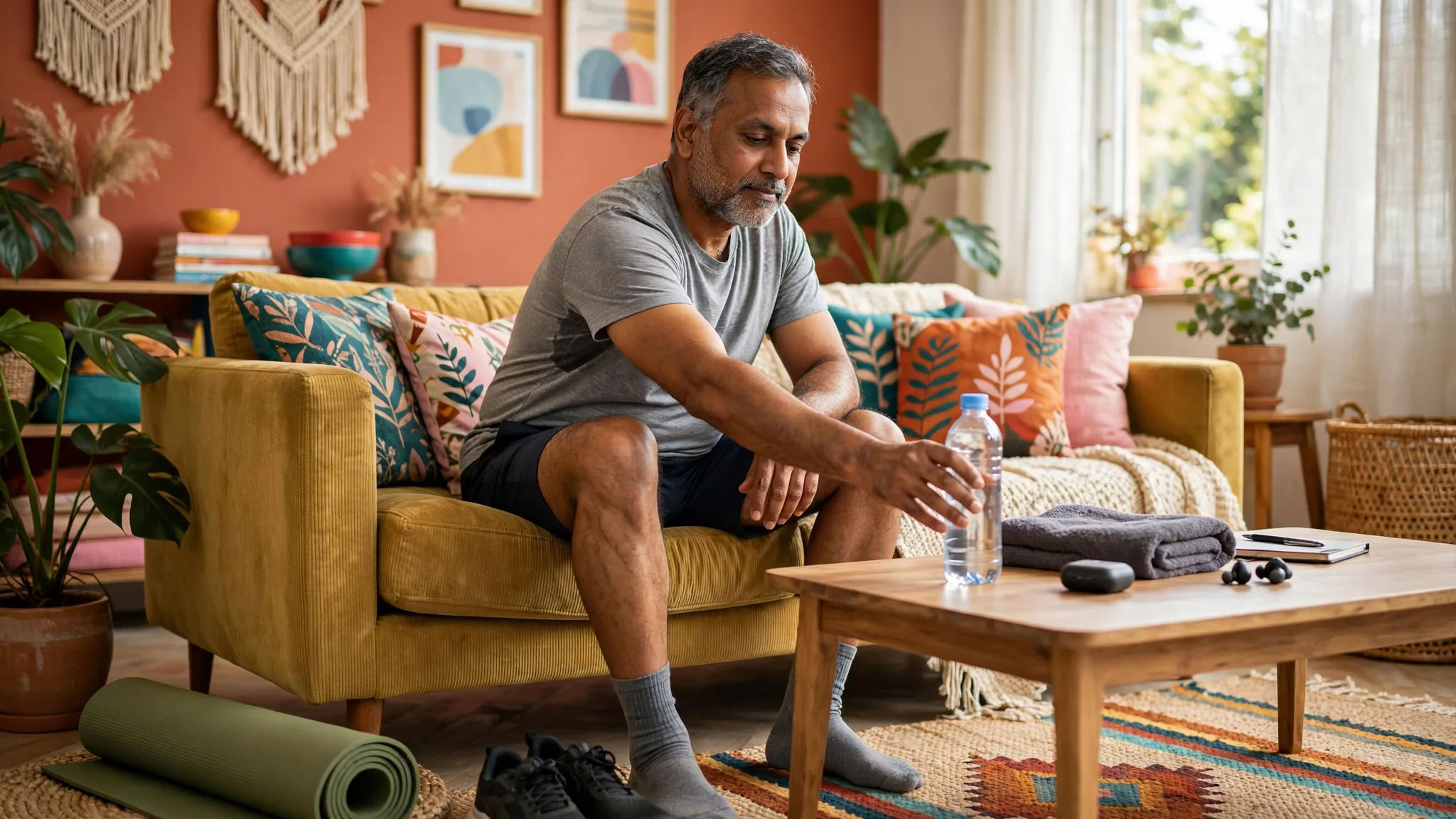
Woke up stiff after a workout and wondering if you overdid it? That achy, heavy feeling a day or two later is common, especially after new moves or more volume.
Soreness patterns are not definitive, so this guide helps you decide between rest and normal activity, plus the red flags that mean stop and get care.
Start here.
- Mild, even soreness that eases with movement often allows light activity; sharp, worsening, or one-sided pain favors rest.
- Sleep, hydration, regular meals, and easy movement support comfort better than trying to push through intense workouts.
- Severe pain, major swelling, inability to bear weight, or dark urine needs urgent medical care.
What Soreness Usually Feels Like
For many adults, general muscle soreness feels dull, tender, or stiff and shows up 12 to 72 hours after unfamiliar activity. It is often felt on both sides of the body and tends to ease a little after a warm shower or short walk.
That pattern is not a diagnosis and does not prove your workout was good or bad. Pain that is sharp, stabbing, or focused in a joint, tendon, or one spot deserves more caution than broad, even muscle achiness.
Should You Rest or Keep Moving?
Let symptoms guide the day. If soreness is mild and your movement looks normal, many adults can do regular daily activity and postpone hard training. If walking, stairs, lifting, or sleeping feel altered, choose rest or a much lighter day.
Avoid testing sore muscles with heavy weights, sprints, or long intense sessions to make up for missed effort. A good rule is to keep intensity low enough that movement feels smoother after a few minutes, not worse.
- Choose rest or medical advice if pain is severe, rapidly worsening, or limits normal walking.
- Delay intense lower-body work if quads, glutes, or calves feel very stiff or weak.
- Return to harder sessions only when soreness is mostly resolved and movement feels controlled.
Gentle Ways to Stay Active While Sore
On a mildly sore day, short easy movement can feel better than staying completely still. Try a brief walk, light household tasks, and relaxed mobility work, keeping breathing easy and stopping if pain sharpens or spreads.
For structure, try Morning Mobility and follow the app’s instructions for timing and sets rather than inventing extra reps. This 10-minute beginner sequence uses bodyweight stretches and circles for neck, shoulders, hips, and legs.
When you are ready for your next session, SweatBud (free iPhone app) can help you plan a workout around the time and equipment you have.
- Keep range comfortable; mild pulling is enough, no forcing end ranges.
- Use slow, even breathing and pause if a joint feels pinchy or unstable.
- Skip aggressive stretching, foam-roller punishment, or extra rounds when sore.
Red Flags That Need Prompt Care
Most soreness improves within a few days, but some symptoms need urgent evaluation. Seek urgent care for severe pain, rapidly increasing swelling, a limb that looks deformed, inability to bear weight, numbness, chest pain, or dark brown urine after hard exercise.
Also contact a clinician promptly for fever with muscle pain, soreness after a fall or direct injury, pain that worsens after three to four days, or any concern about medication, supplements, or an underlying condition. Do not try to self-diagnose.
- Call emergency services or go to urgent care for dark urine, extreme weakness, or severe swelling.
- Bring a list of recent workouts, medicines, supplements, and illnesses to your visit.
- When in doubt, rest and get professional advice rather than pushing through.
For Adults, For Kids, and What Next
This activity guidance is for generally healthy adults. Adults can use symptom-based choices: light activity for mild soreness, rest for significant pain, and professional care for red flags. Keep hydration, meals, and sleep steady, and avoid scheduling back-to-back hard workouts.
Children and teens should not follow adult push-through advice. Caregivers should encourage normal play only if the child moves comfortably, wants to play, and has no injury, swelling, limp, or severe pain. For evening wind-down, families can follow Evening Recovery in the app exactly as instructed, stopping any move that hurts.
- Adults: if soreness keeps returning, reduce volume, add rest days, and ask a qualified professional.
- Kids: seek pediatric care for limping, joint swelling, night pain, or pain that limits school or play.
Find your next move.
Open a guide for the exercise order, instructions, sets, and rest periods. The listed times are estimates; take the rest you need.
Loading workout details…
A few good questions.
Should I work out again if I am still sore?
If soreness is mild and movement feels normal, many adults do light activity and save intense training for later. If pain is strong, one-sided, changes how you walk, or is getting worse, rest and consider contacting a health professional.
What helps soreness feel better?
Restful sleep, regular meals and fluids, easy walks, and gentle mobility within comfort are sensible supports. Avoid extra hard workouts, forceful stretching, or heat and cold extremes that irritate symptoms, and get care for any red flags.
Further reading
Please consult a qualified healthcare or fitness professional before starting or changing an exercise routine, especially if you have an injury, health condition, balance concerns, or are pregnant or returning after childbirth. This article provides general education, not individualized medical advice. Choose age-appropriate activity and stop if an exercise causes pain, dizziness, or unusual symptoms.