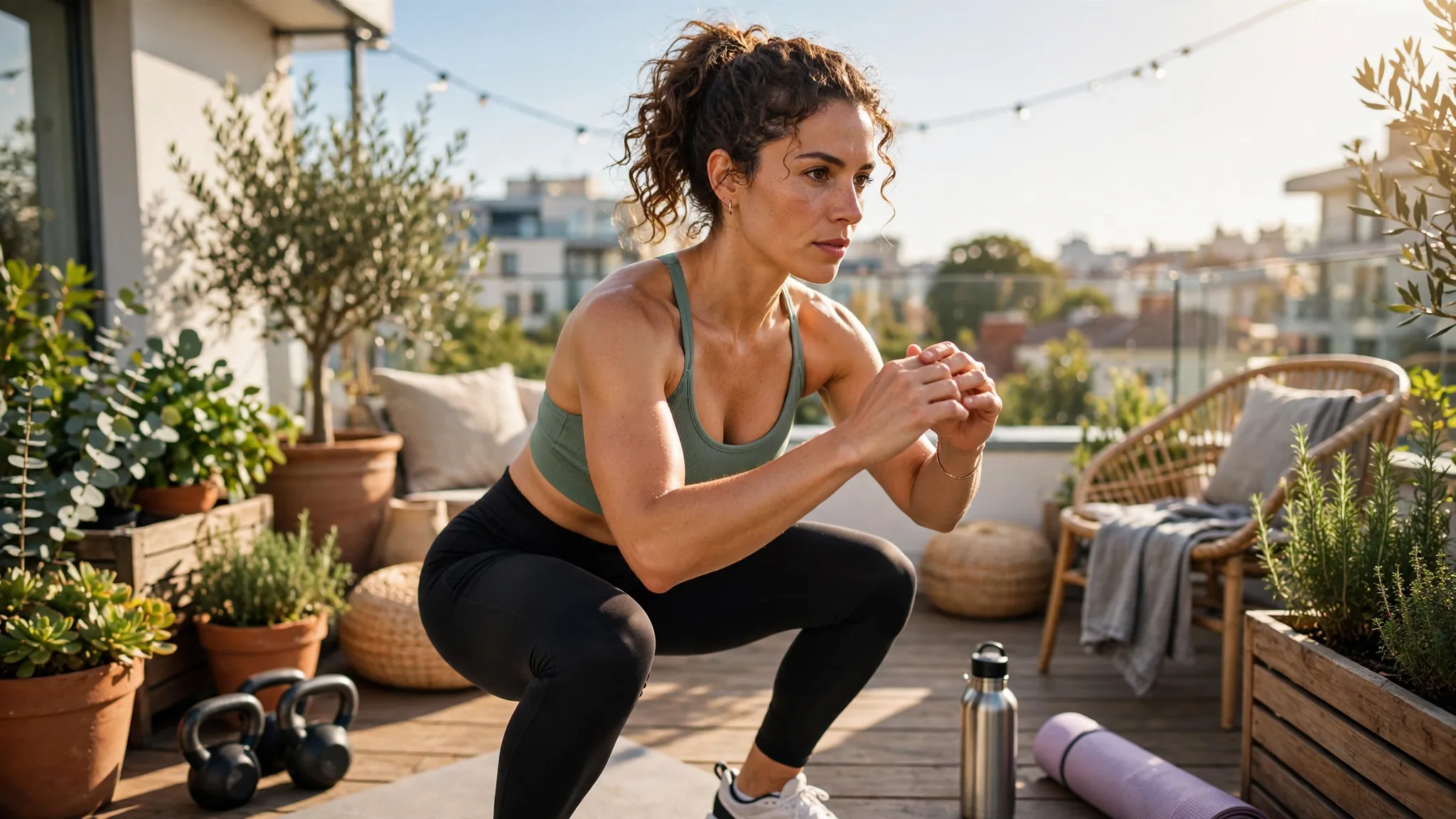
Stronger legs, one steady rep at a time.
Explore standing leg training with squats, hinges, and calf raises you can adjust.
Jump to the workouts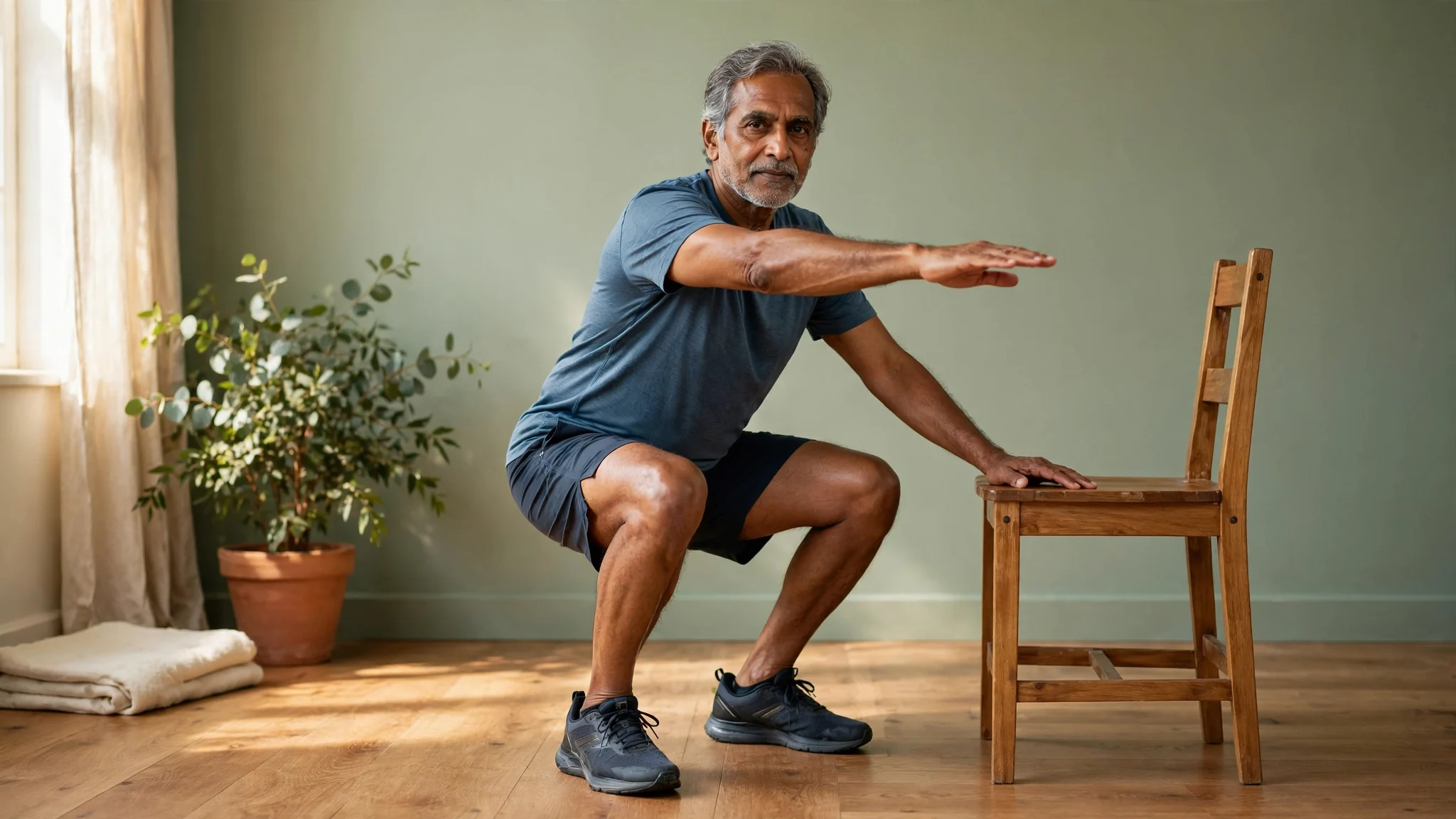
Strong legs support everyday movement, from climbing stairs to standing up from a chair with confidence. This guide focuses on steady, standing-only practice with support nearby, so you can build strength and comfort without getting down to the floor.
We will walk through two short beginner options, how to set up a stable support, and the difference between a squat and a hinge. Take your time, use touch support as needed, and choose ranges of motion that feel steady today.
Start here.
- All moves are standing with a wall or sturdy chair for touch support.
- Squats bend the knees more; hinges push the hips back with soft knees.
- Both routines finish with standing quad stretches that challenge balance.
Why train legs while standing?
Standing leg work trains the muscles in the way you use them each day. Squats emphasize the thighs and glutes for sitting and standing, hinges focus on the hips and back of the legs for bending, and calf raises support ankle strength for walking and stairs.
The Squat, Hinge & Calves session keeps everything upright in about ten minutes. You will warm up with arm swings and arm circles, then move through short intervals of squats, hinges, and calf raises before finishing with standing quad stretches.
For your next lower-body session, SweatBud (free iPhone app) can help shape a workout around your equipment and available time.
- No floor work required, so you can wear everyday active clothes and supportive shoes.
- Short timed intervals let you pause early and rejoin when ready.
- Touch support helps you focus on leg effort rather than worrying about wobble.
Set up support you can trust
Choose a support you can trust with some body weight, like a sturdy counter, wall, or heavy chair pushed against a wall. It should not wobble or roll, so avoid office chairs with wheels, lightweight folding chairs, or small side tables that tip easily.
Stand close enough to touch it with one or both hands, with feet hip-width apart on a non-slippery surface. Wear supportive shoes or go barefoot only if the floor feels grippy, clear clutter around you, and keep your touch light until you need more balance help.
- Place support at your side for squats and calf raises, in front for hinges.
- Check that the chair legs are even and the wall area is clear.
- Keep water nearby so you do not need to step away mid-set.
Squat versus hinge: what is the difference?
In a bodyweight squat, knees bend forward as hips sink down and slightly back, like sitting toward a chair behind you. Keep your chest lifted, weight spread across the whole foot, and depth shallow enough that heels stay down and your support touch stays light.
In a hip hinge, hips push straight back with only a soft knee bend and a long spine. Think about closing a car door with your hips while hands slide toward your thighs. If your back rounds or you feel pulled off balance, shorten the range and reset with both hands on support.
- Squat cue: knees track in direction of toes, chest tall, sit down between heels.
- Hinge cue: hips go back, shins stay fairly vertical, spine long.
- Both: exhale on effort, pause if knees, hips, or back feel uncomfortable.
Calves, balance, and the standing quad stretch
Calf Raise Intervals build ankle endurance with repeated lifts and lowers, which can feel wobbly when you are tired. Stay near your support, press through the balls of your feet to lift the heels, lower gently, and distribute weight evenly without rolling the ankles.
Both routines end with a Standing Quad Stretch on each side, which also challenges balance because you stand on one leg. You can preview the flow in Upright Leg Foundations and plan to keep one hand on support, knees close, and the pull gentle.
- For calf raises, use fingertip touch and look ahead, not down.
- For the quad stretch, bend only as far as you can stand tall.
- If lifting the foot feels unsteady, skip the stretch and ask a qualified professional about a supported alternative.
Choose and adapt your session
The Upright Leg Foundations option is slightly longer at about twelve minutes and follows a similar standing flow. After arm circles, you will repeat squats, hinges, and calf raises, with arm swings placed in the main section for extra movement before the quad stretches.
Try one routine two times per week on non-consecutive days, leaving rest between sessions. Do fewer seconds or take extra pauses when needed, and open the full library instructions for timing and form reminders. Continue using support as needed while you build steady repetitions with good form.
- Shorter day: pick Squat, Hinge & Calves for a ten-minute practice.
- More movement: pick Upright Leg Foundations when you want arm swings later.
- Make it steadier: keep feet hip-width apart, shorten hinge reach, and hold support with a firm grip.
Find your next move.
Open a guide for the exercise order, instructions, sets, and rest periods. The listed times are estimates; take the rest you need.
Loading workout details…
A few good questions.
Do I need to get on the floor for these leg routines?
No. Both sequences are fully standing, including the warm-up and the standing quad stretches. Keep a stable wall or heavy chair within reach for the balance moments.
What if the standing quad stretch feels too wobbly?
Stay connected to support and reduce the range. Keep the standing knee soft and stretch only to gentle tension. If you feel unsteady, skip it for now and ask a qualified professional about a supported alternative.
Further reading
Please consult a qualified healthcare or fitness professional before starting or changing an exercise routine, especially if you have an injury, health condition, balance concerns, or are pregnant or returning after childbirth. This article provides general education, not individualized medical advice. Choose age-appropriate activity and stop if an exercise causes pain, dizziness, or unusual symptoms.