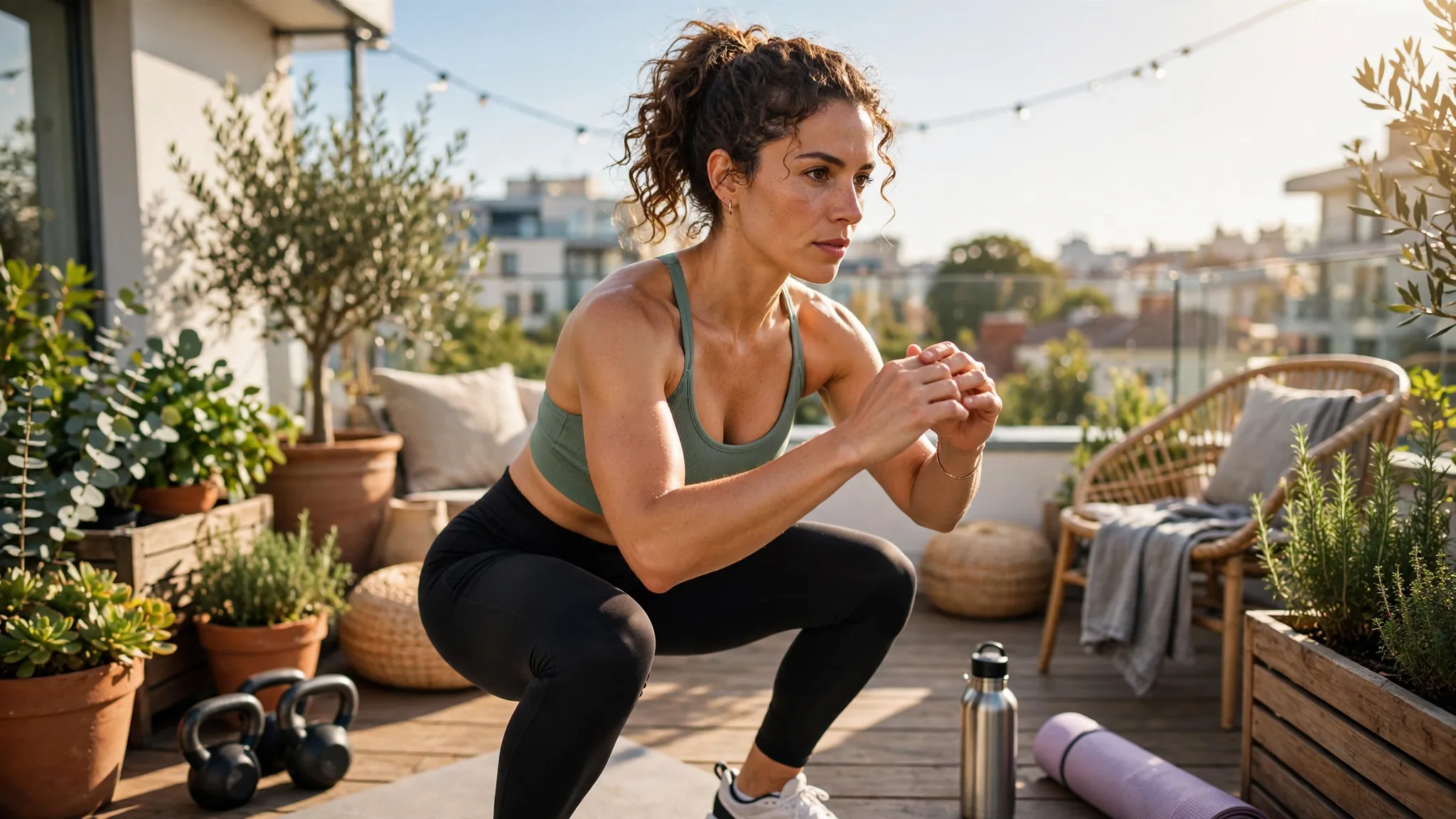
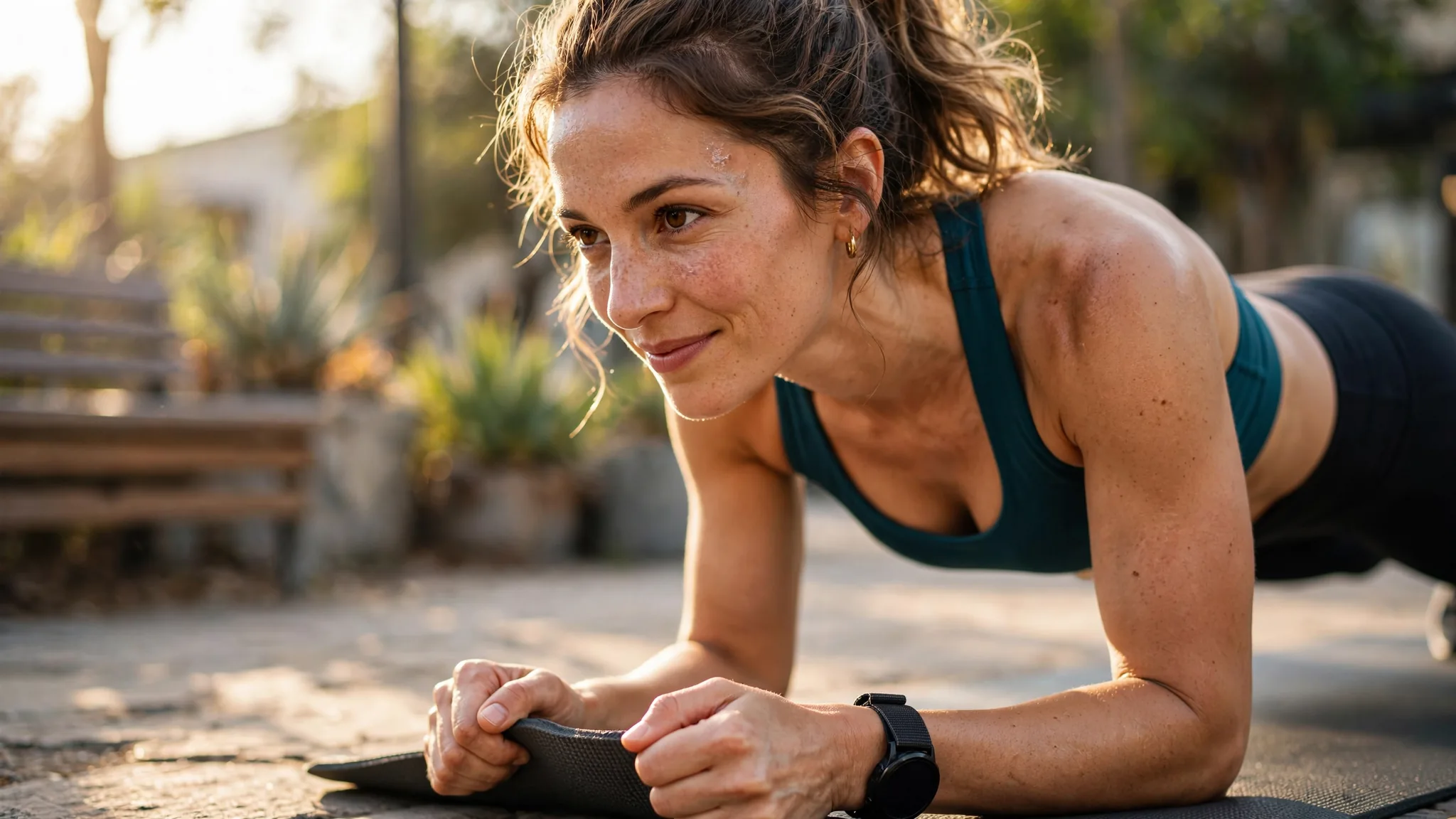
How Long Should You Actually Plank?
A shorter controlled hold can be more useful than chasing a record.
Jump to the workouts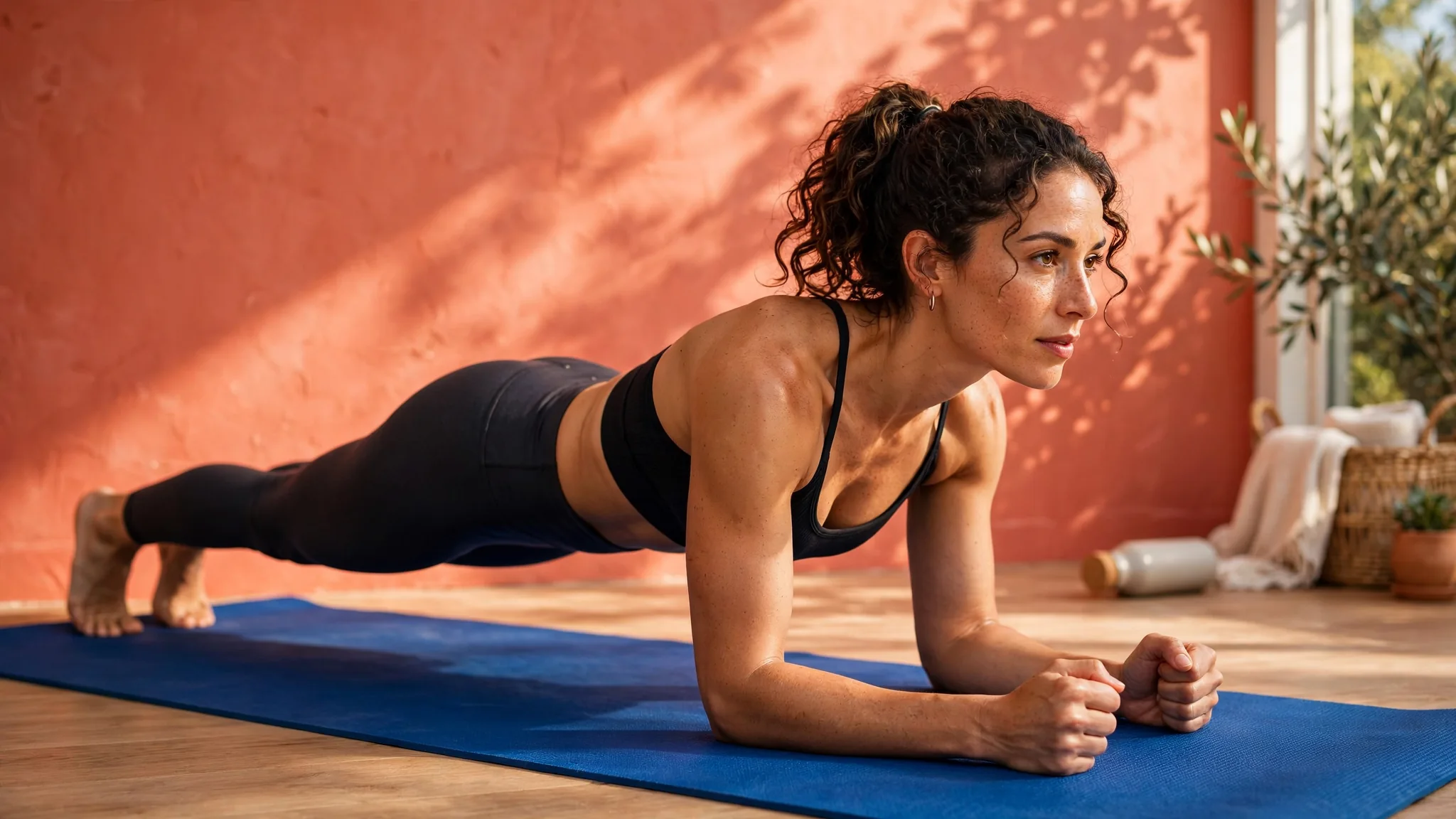
Planks look simple until the shaking starts and the clock feels twice as slow. It is tempting to chase a big number, but longer is not automatically better if your hips sag or your breath stops.
There is no single perfect plank time that fits every adult body. Your best hold is the one you can do with steady posture, calm breathing, and control — and that changes day to day.
Start here.
- Stop your plank when your technique starts to break down, not when the timer says so.
- Short, clean holds with easy breathing beat long, sloppy holds for most home exercisers.
- Choose a regression like knees-down or dead bug holds when form fades quickly.
The Short Answer: As Long As Form Lasts
For most adults exercising at home, think in quality seconds rather than record minutes. A set might last 10 to 35 seconds if you are newer to planks, or longer if you can stay tall through your spine. Ability, fatigue, and body position matter more than any fixed target.
Use the timer as feedback, not as pressure. If your low back dips, shoulders creep toward ears, or you cannot breathe steadily, the useful set is over. Rest, reset, and go again only if you can regain clean alignment.
What A Good Plank Actually Feels Like
A solid plank feels like active work from shoulders to feet, not a collapse into your joints. Your head stays in line with your spine, ribs feel gently knitted down, glutes and thighs are engaged, and weight is shared through hands or forearms and toes.
- Neck long, gaze down between hands
- Shoulders away from ears, upper back broad
- Hips level, belly gently braced, glutes on
- Steady nasal breathing you could keep up while walking
When To Stop Your Set
Treat form change as your stop sign. End the hold when hips sag or pike up, shoulders shrug, elbows flare, or breathing turns strained and held. Mild muscle effort is expected, but sharp pain, dizziness, or inability to breathe comfortably means stop and rest.
Adults with an injury, pregnancy, pelvic floor concerns, high blood pressure, or a recent surgery should check with a qualified health professional before doing planks. Skip holds that cause joint pain or pressure you cannot ease by adjusting position.
- Hips drop, back arches, or butt lifts high
- Neck cranes, shoulders burn more than trunk
- You hold your breath or feel lightheaded
- Any sharp, shooting, or joint pain appears
Pick The Version That Fits Today
The best plank is the one you can own right now. A knees-down plank, incline plank with hands on a sturdy couch or counter, or dead bug hold can teach the same bracing pattern with less load. You can find all three styles inside Dead Bug & Plank Practice, which alternates core holds with short resets.
For a core session that fits your routine, SweatBud (free iPhone app) can shape workouts around your time and equipment.
Start with the variation that lets you breathe easily for the full interval. When the last few seconds still look clean, progress by lowering the incline, lifting knees, or adding a few seconds — not by jumping straight to long holds.
- New or tired: incline plank or knees-down plank
- Back feels strained: try Dead Bug Hold on your back
- Ready for more: forearm plank with slow side arm reach
- Wobbly: shorten the hold and add an extra rest
Breathe And Brace Without Holding Your Breath
Bracing does not mean bearing down or locking your breath. Think of gently tightening your midsection as if preparing for a light tap, then keep air moving. Inhale through your nose, exhale slowly, and let your ribs move without letting your belly fully sag.
If you catch yourself gasping or clenching your jaw, pause and reset. A slightly shorter hold with relaxed shoulders and smooth breathing trains control better than a longer hold spent turning red and gripping everything.
How To Build A Sensible Plank Practice
Instead of inventing random sets, follow a guided structure that balances work and rest. The 12-minute beginner session Dead Bug & Plank Practice pairs 35-second main intervals with warm-up movement and cool-down stretches, so just follow the app instructions for sets, timing, and rest.
Aim for two or three short core sessions per week on non-consecutive days, paired with walking or other activity you enjoy. Keep notes on which variation you used and when form broke down, then progress only one variable at a time.
- Warm up shoulders and hips with arm swings and circles
- Do 2 to 4 clean holds, resting fully between efforts
- Finish with neck and Child Pose stretches
- Stop early if posture fades and try again next session
Find your next move.
Open a guide for the exercise order, instructions, sets, and rest periods. The listed times are estimates; take the rest you need.
Loading workout details…
A few good questions.
Do I need to work up to a five-minute plank?
No. Most home exercisers get plenty of challenge from shorter, well-aligned holds and regressions. Focus on steady breathing, level hips, and stopping when form slips rather than chasing a specific minute mark.
What if planks hurt my wrists or back?
Stop the variation that bothers you and try a gentler option, such as an incline plank or Dead Bug Hold. If pain persists, feels sharp, or you have a health condition, pause planks and talk with a qualified professional.
Further reading
Please consult a qualified healthcare or fitness professional before starting or changing an exercise routine, especially if you have an injury, health condition, balance concerns, or are pregnant or returning after childbirth. This article provides general education, not individualized medical advice. Choose age-appropriate activity and stop if an exercise causes pain, dizziness, or unusual symptoms.